The best-preserved ancient temple in Egypt — a colossal monument to the falcon god Horus.
6 AM – 5 PM550 EGP (foreign visitor)24.9781, 32.8734
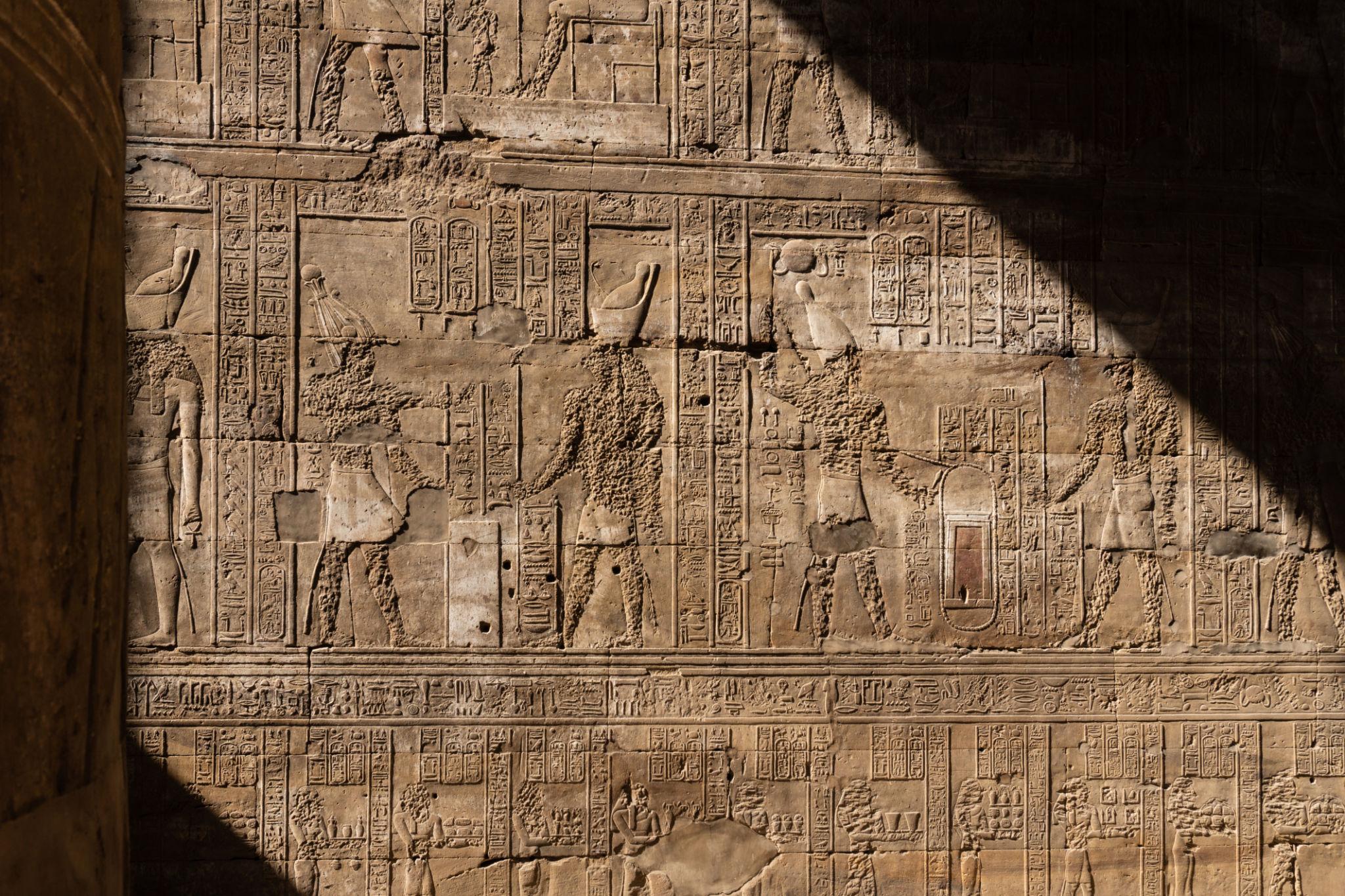
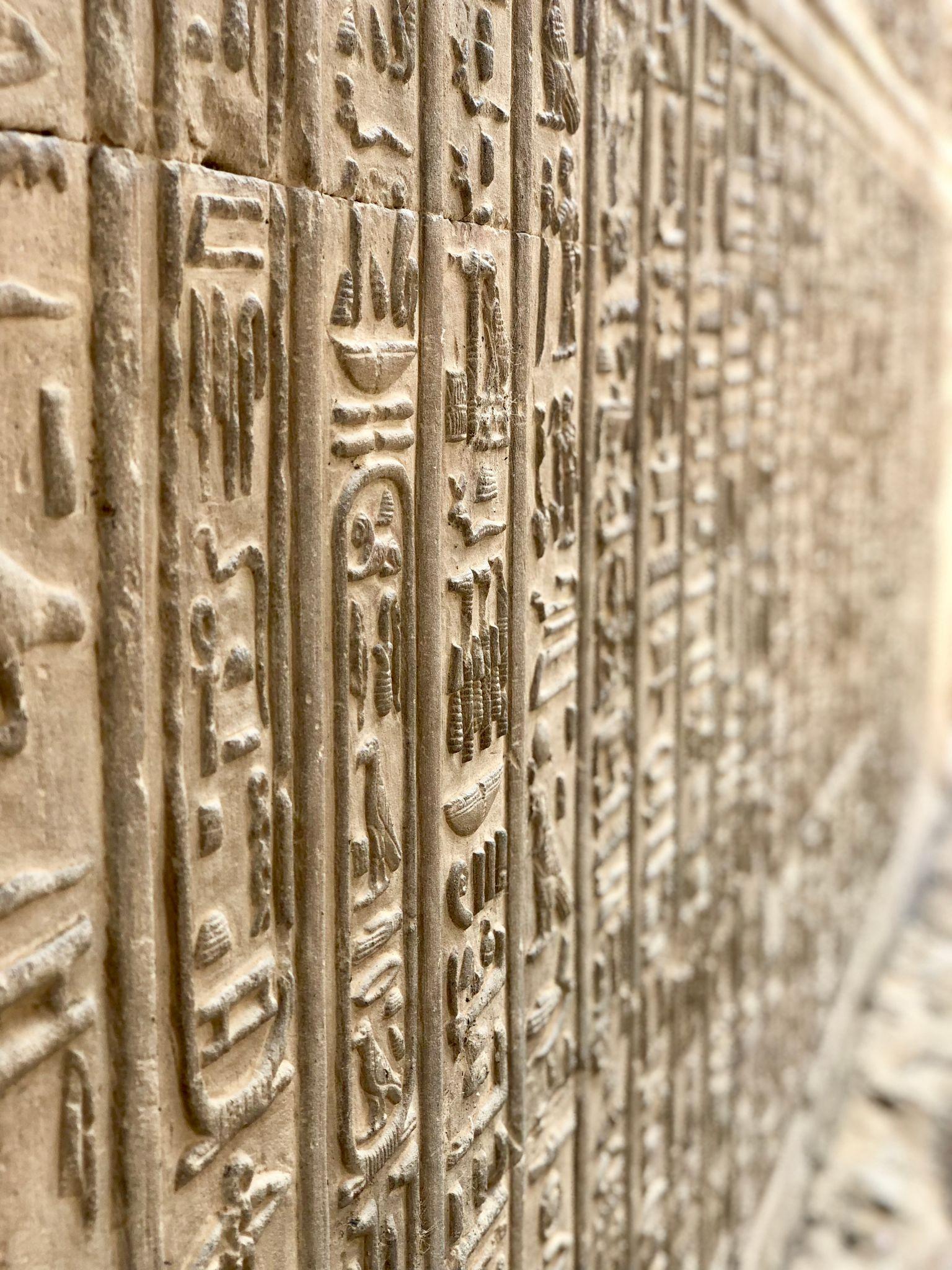
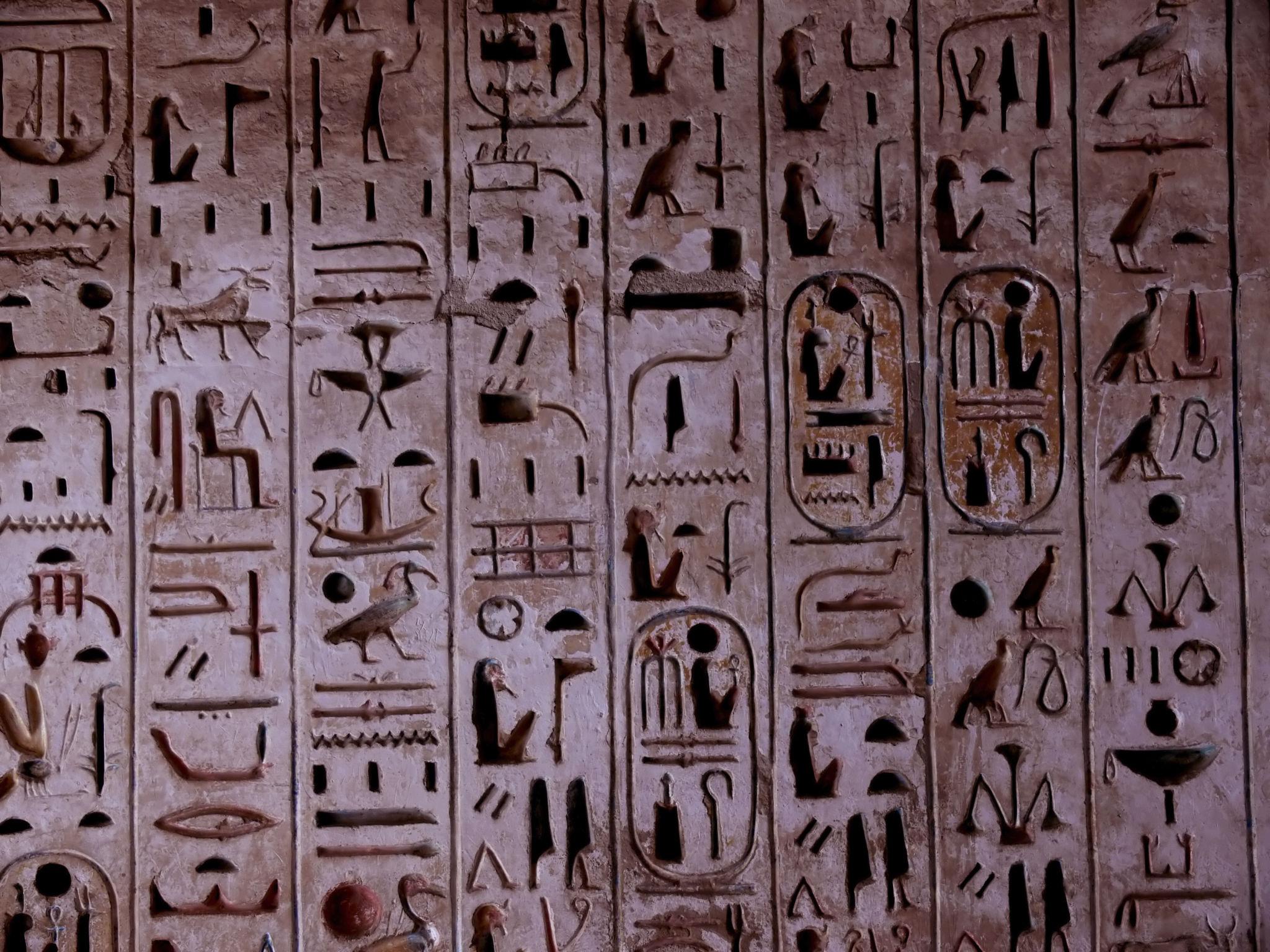
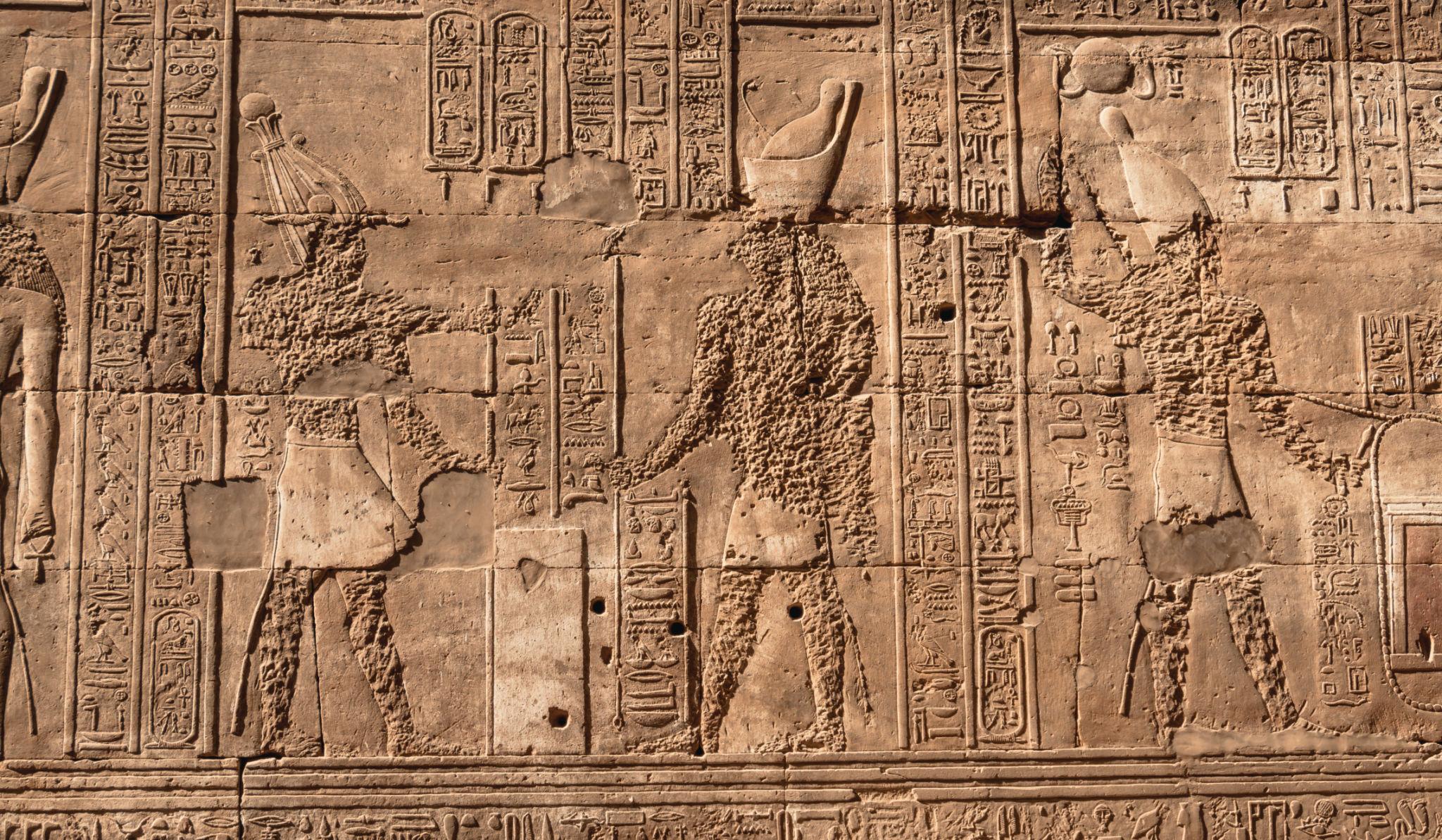
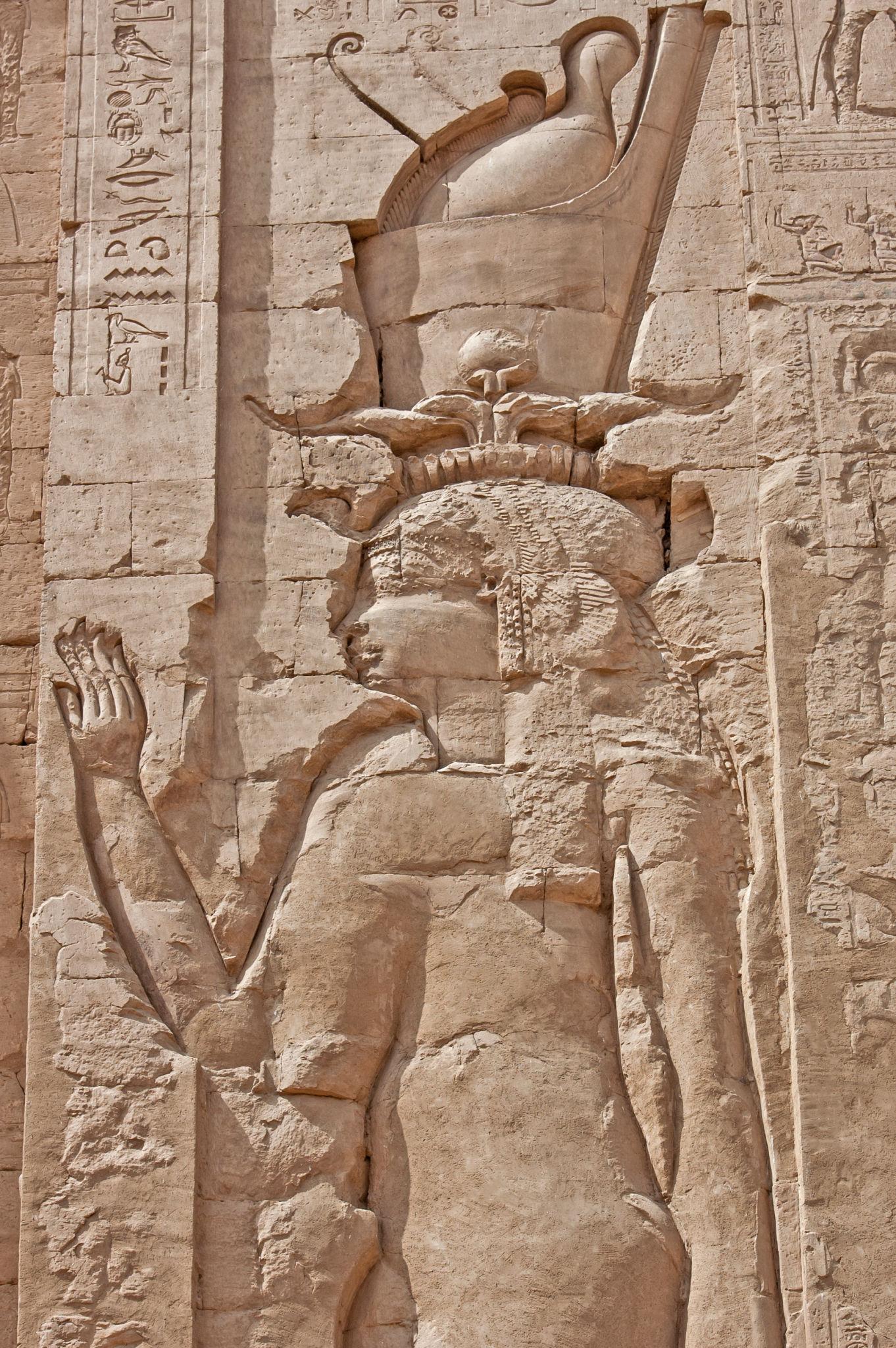
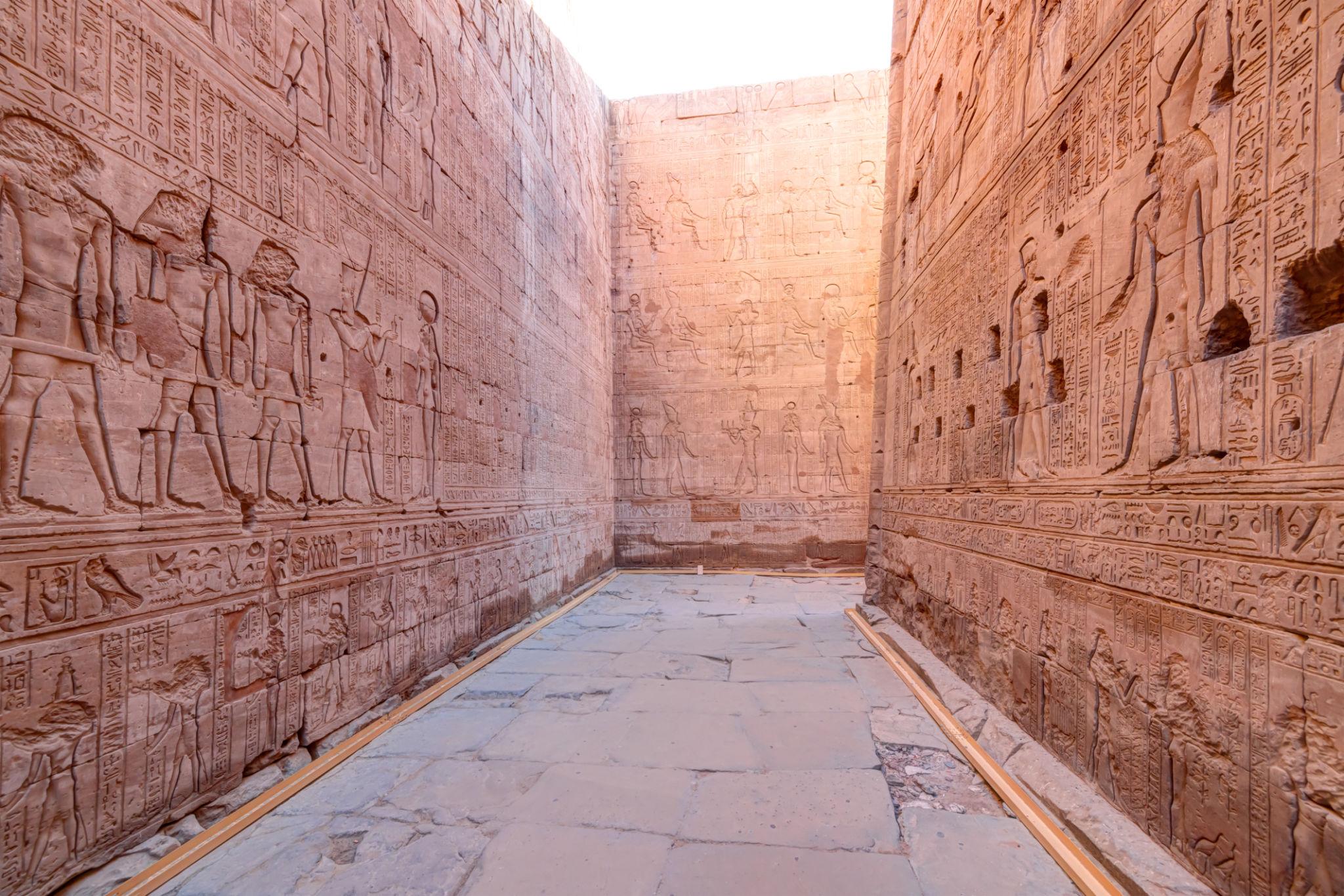
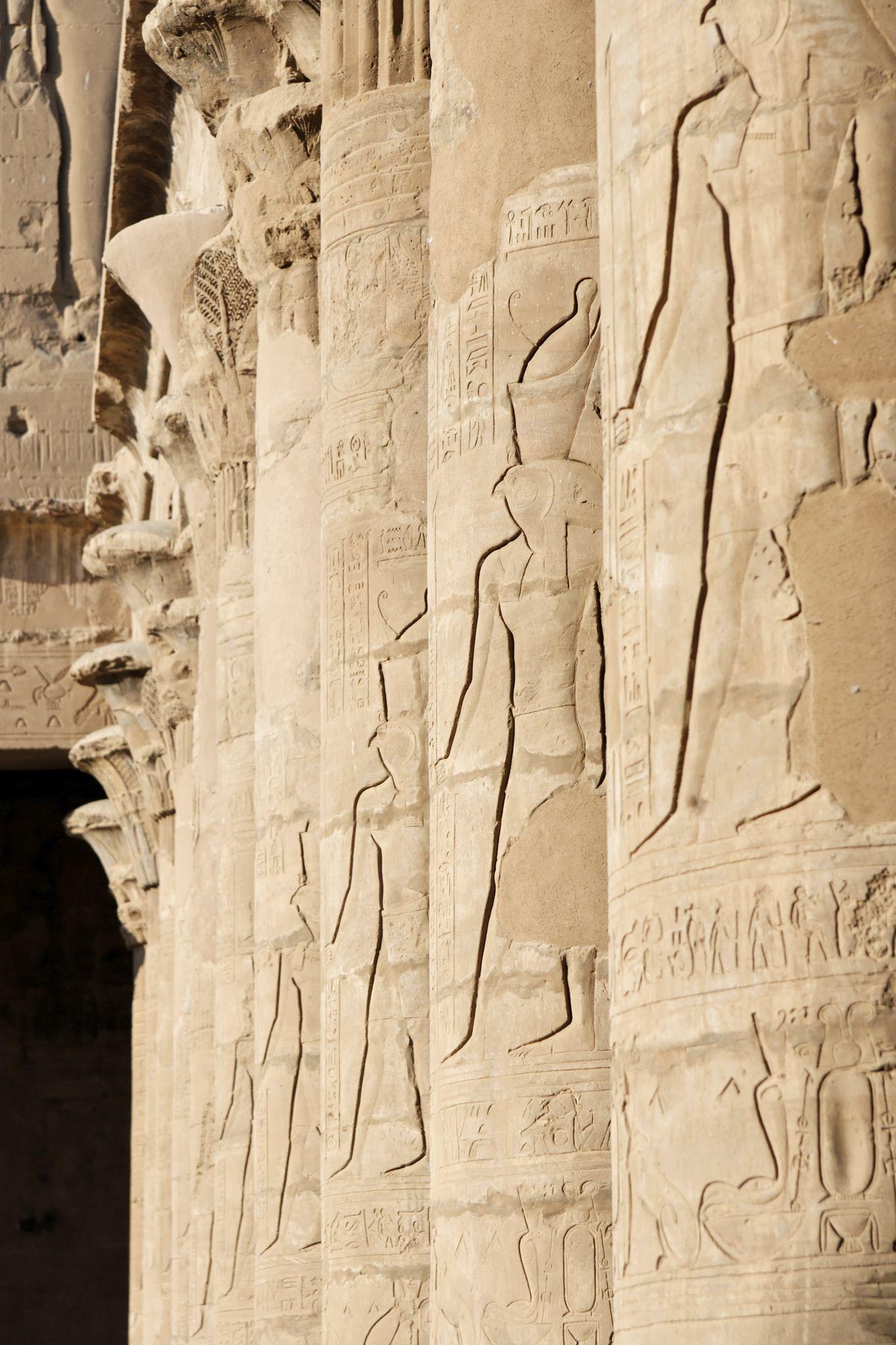
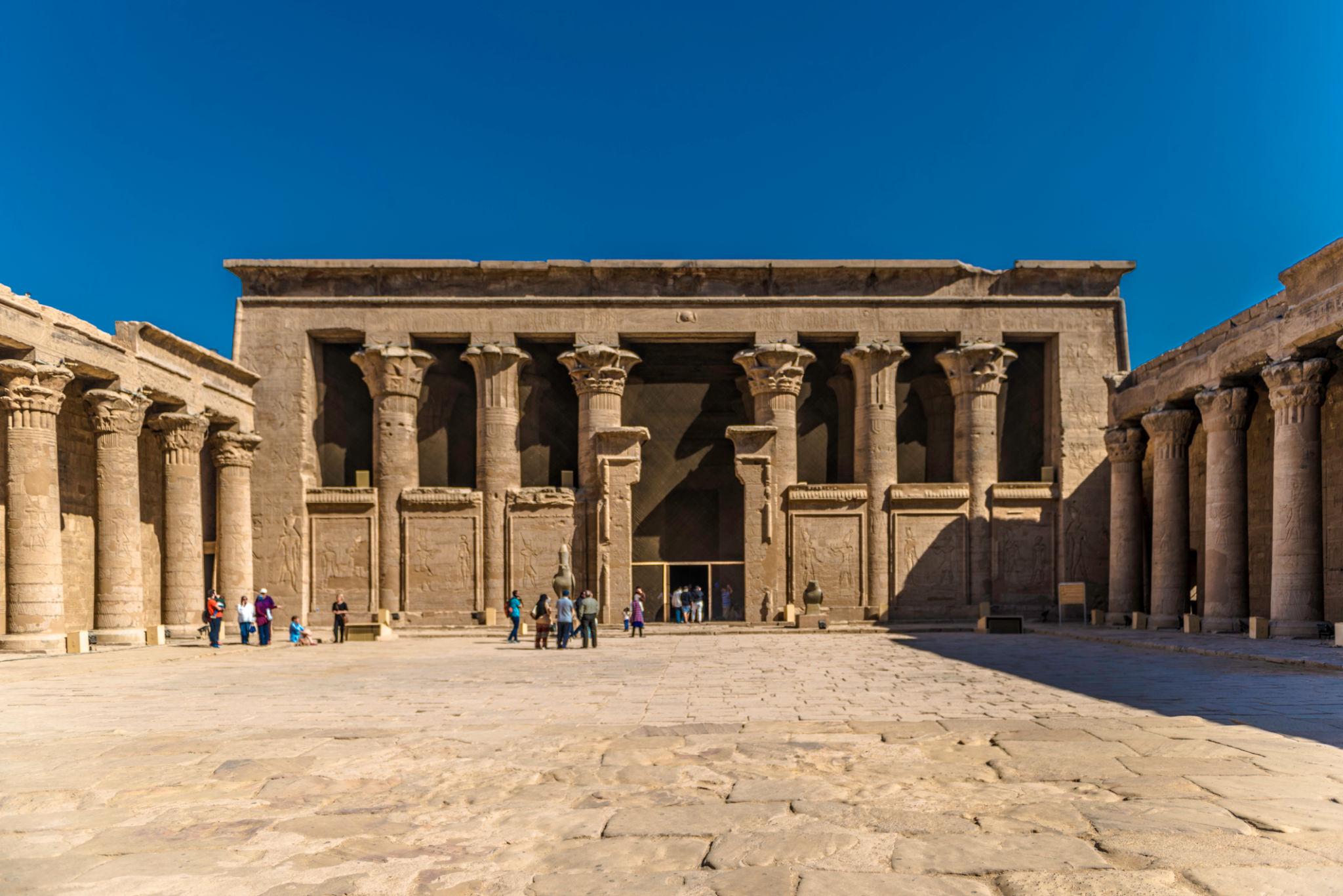
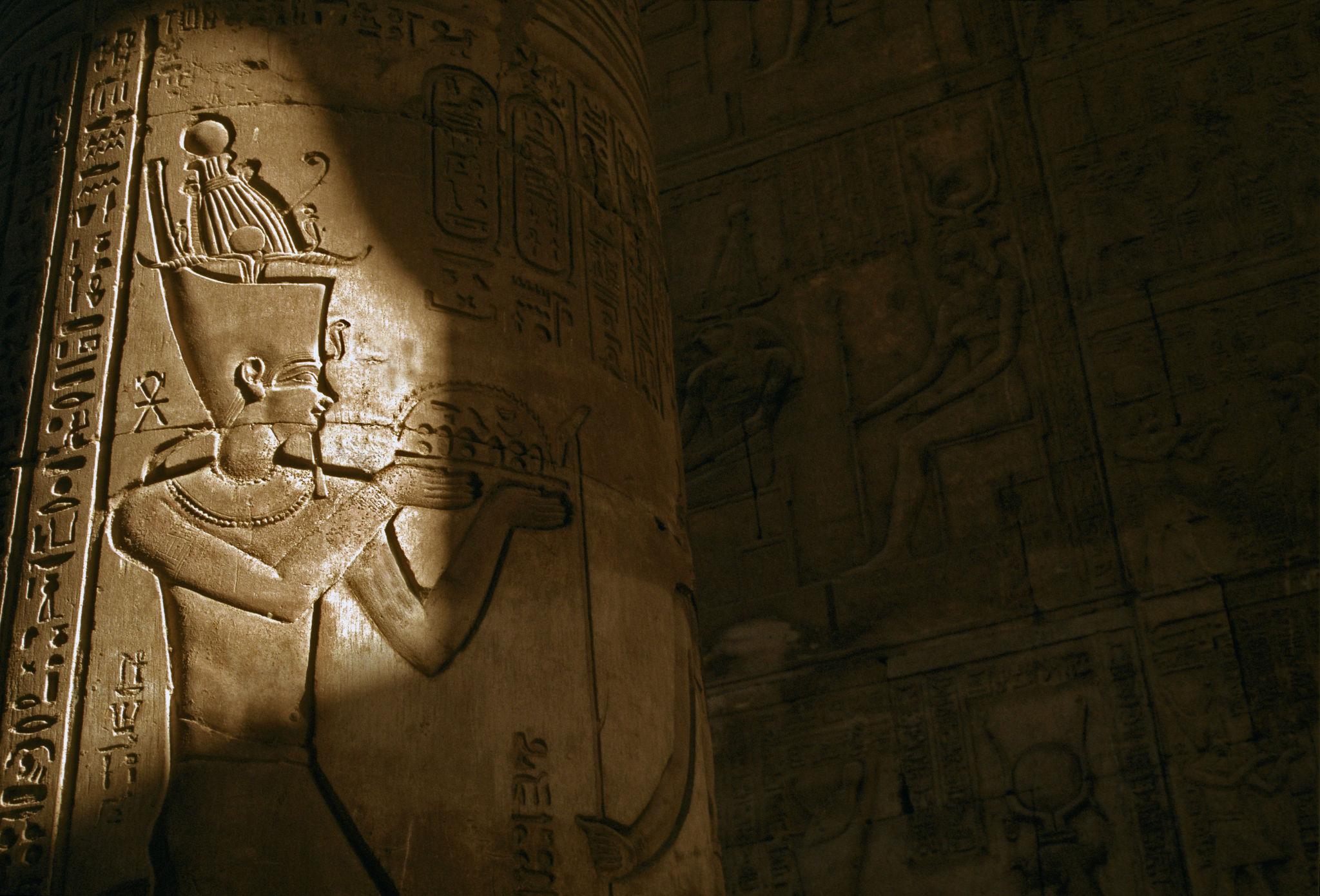
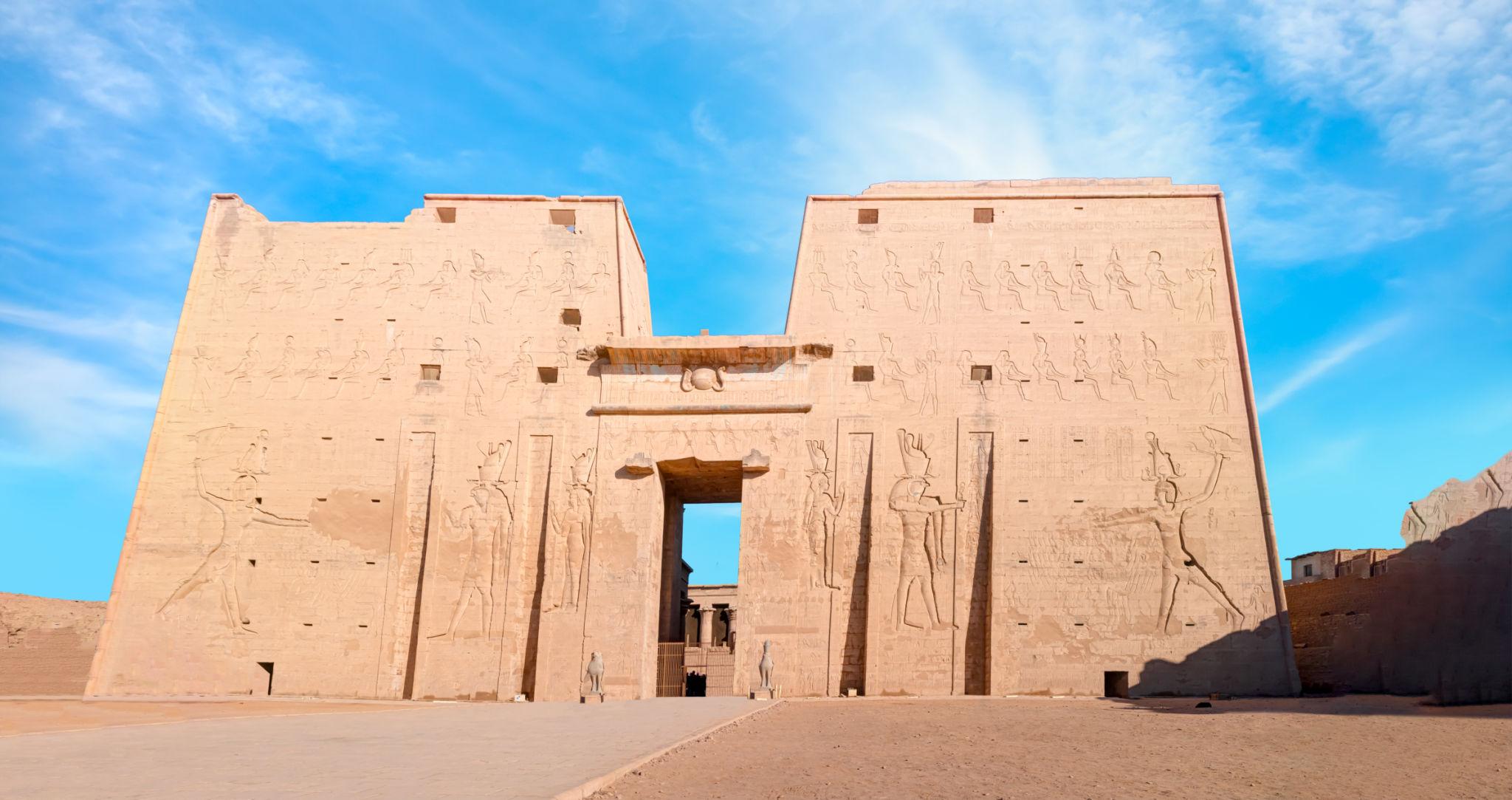
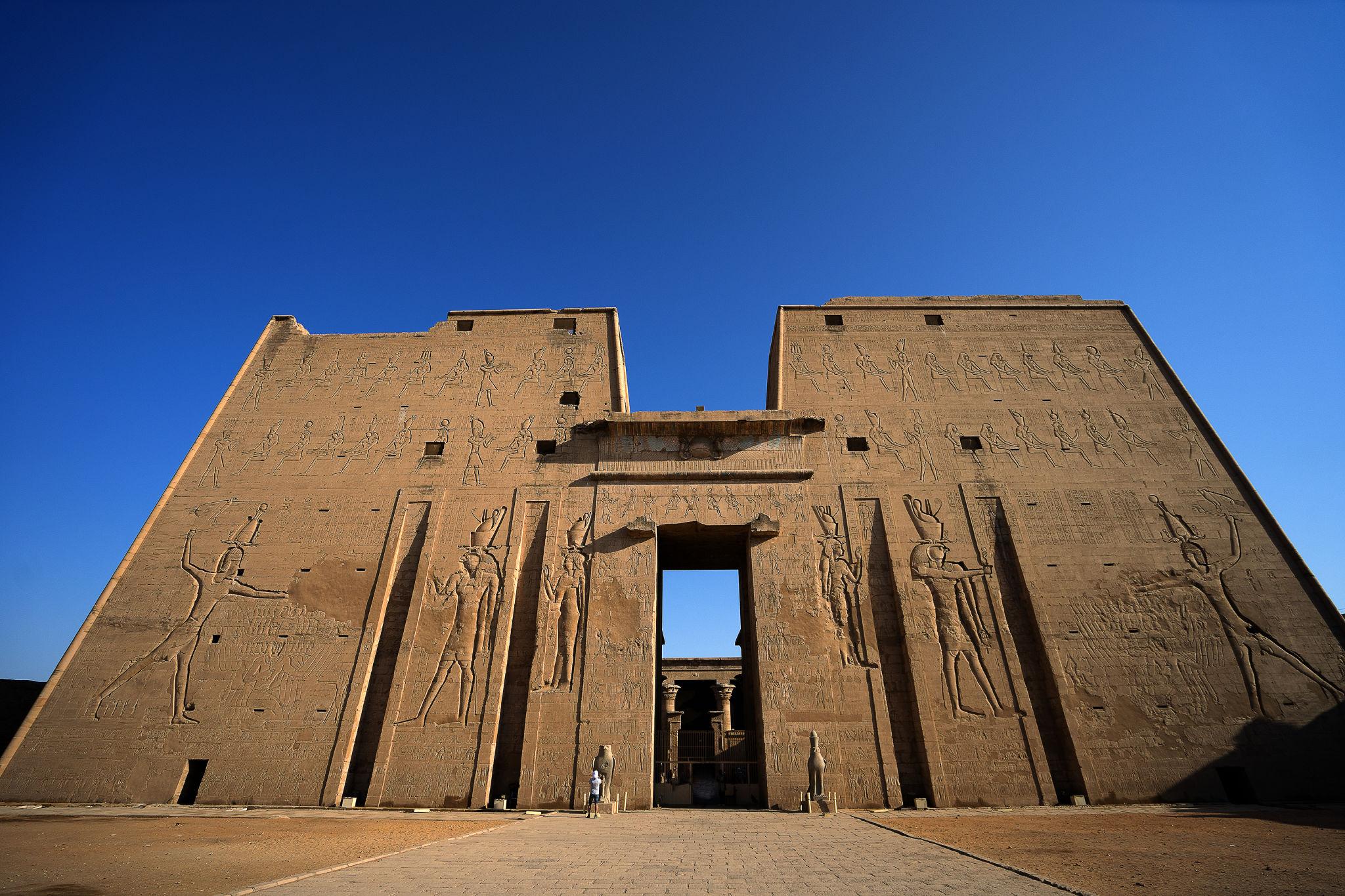
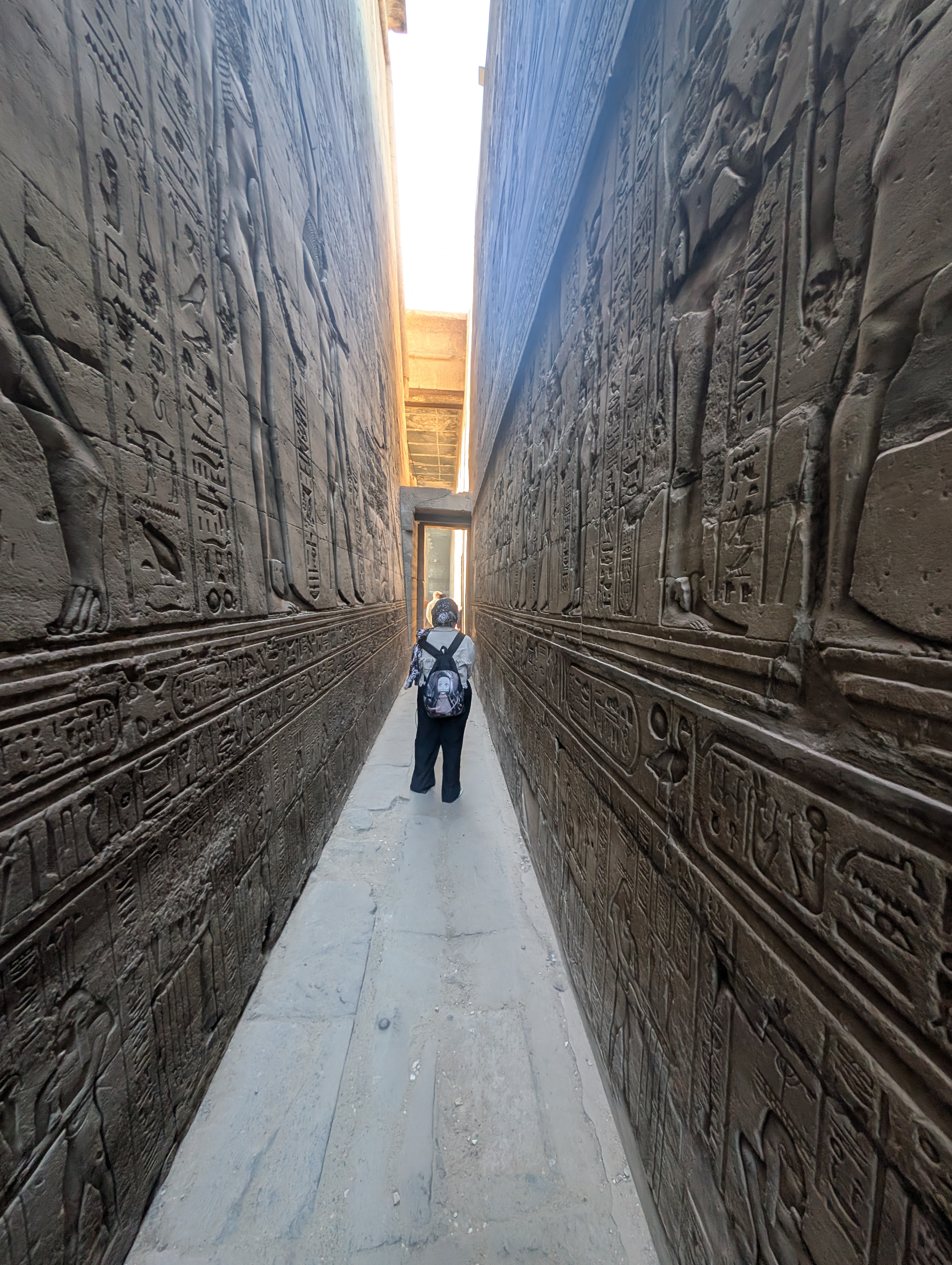
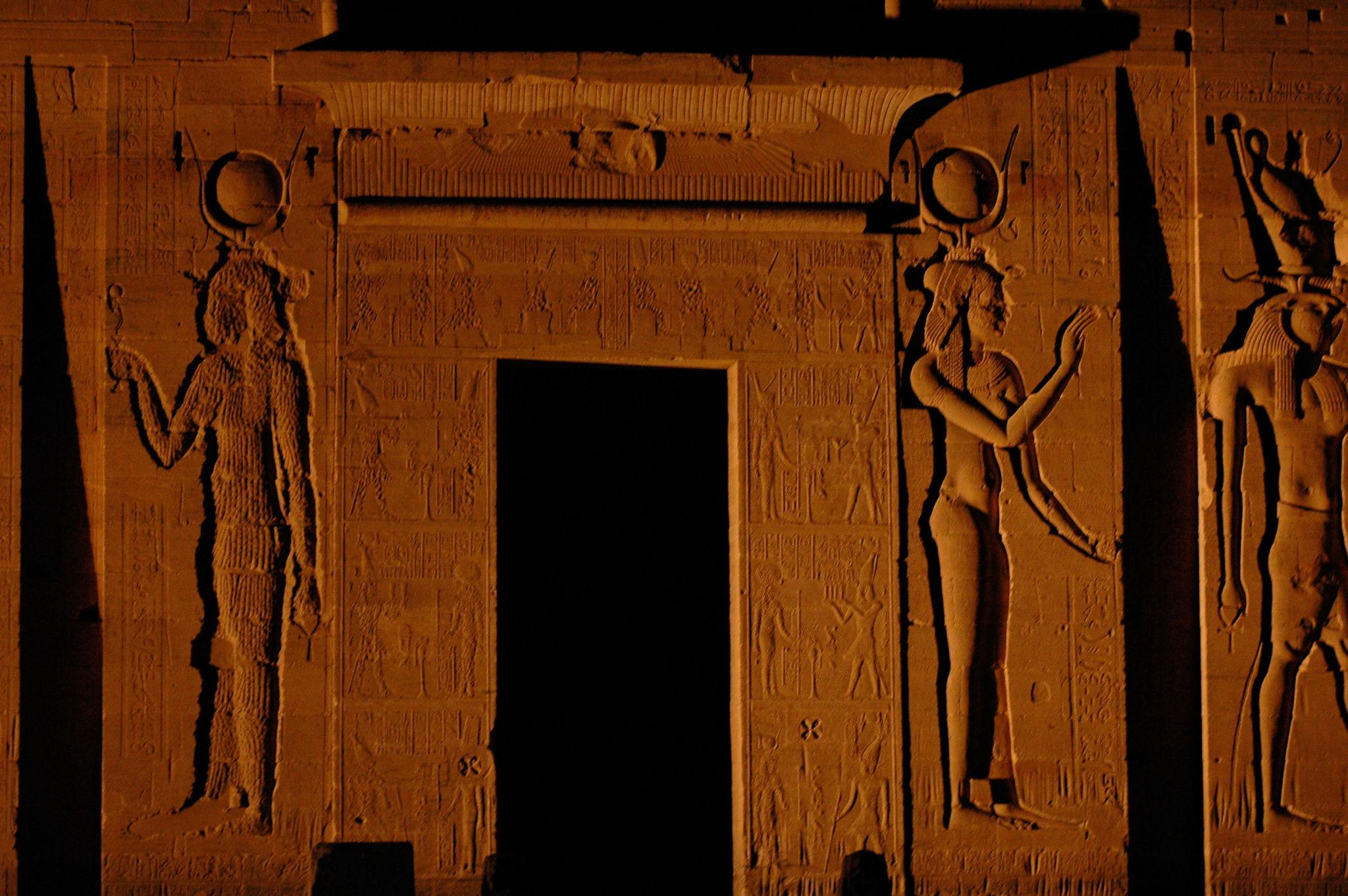
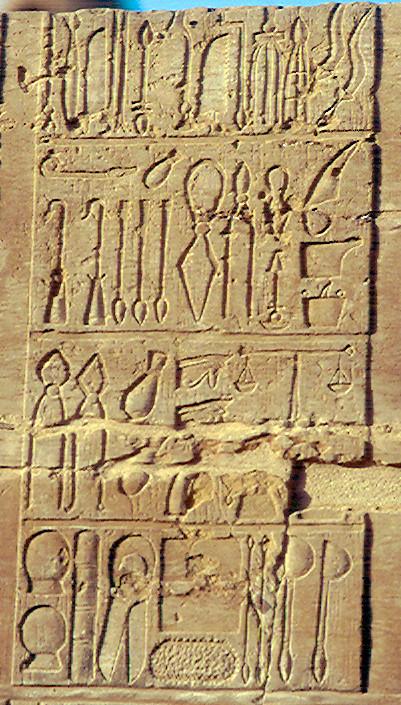
The Temple of Horus at Edfu is the most completely preserved major temple in Egypt. Built between 237 and 57 BC during the Ptolemaic period, this enormous sandstone temple was buried under desert sand and village buildings for centuries, which protected it almost perfectly. Standing 36 meters tall with its massive pylon gateway, it is the second-largest temple in Egypt after Karnak. Every surface is covered in hieroglyphic inscriptions and reliefs that provide invaluable information about Ptolemaic religion, mythology, and temple rituals.
Gallery
Why Visit
The best-preserved ancient temple in all of Egypt — almost completely intact
A colossal pylon gateway rivaling anything at Karnak
A key stop on every Nile cruise between Luxor and Aswan
What to See
The Great Pylon
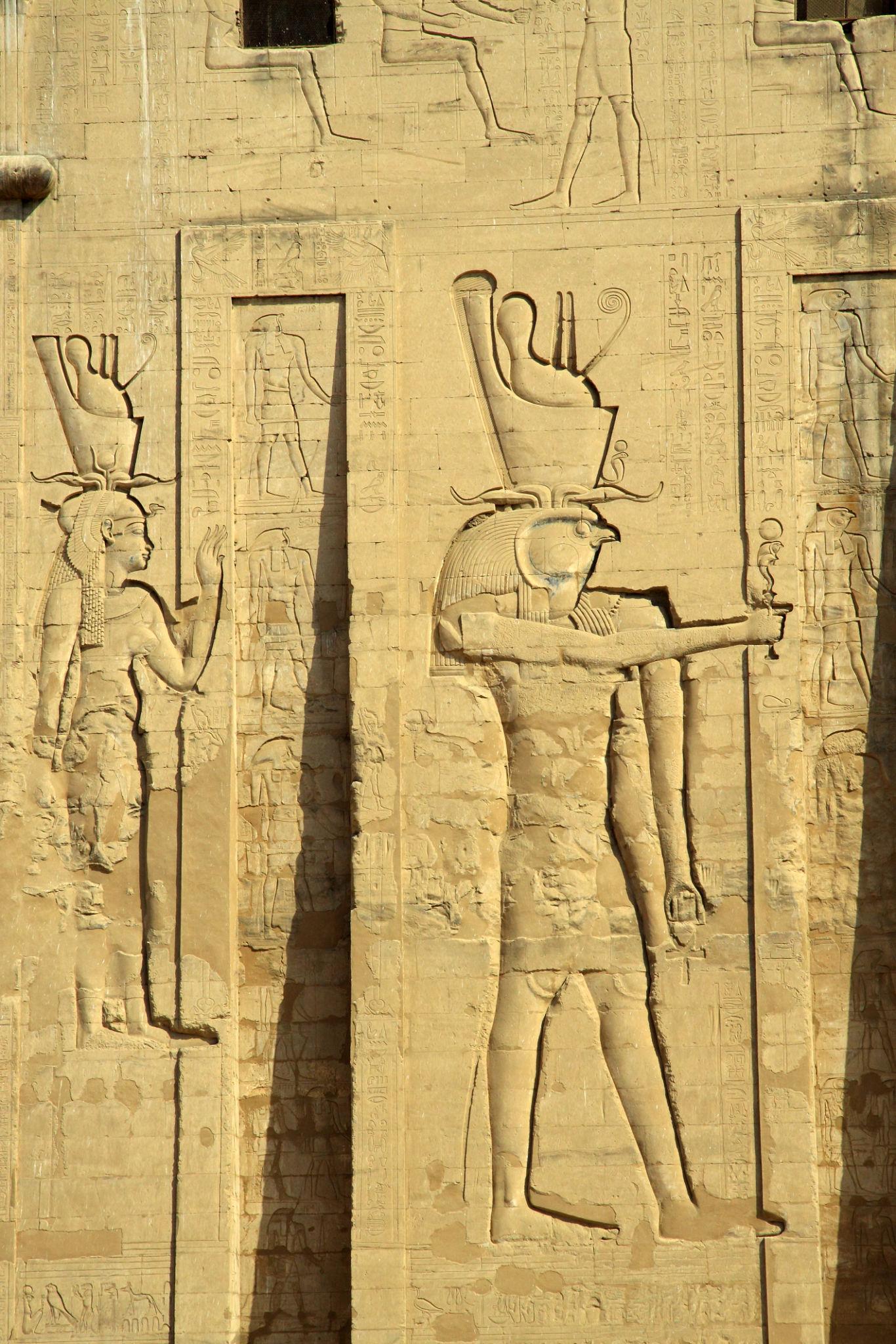
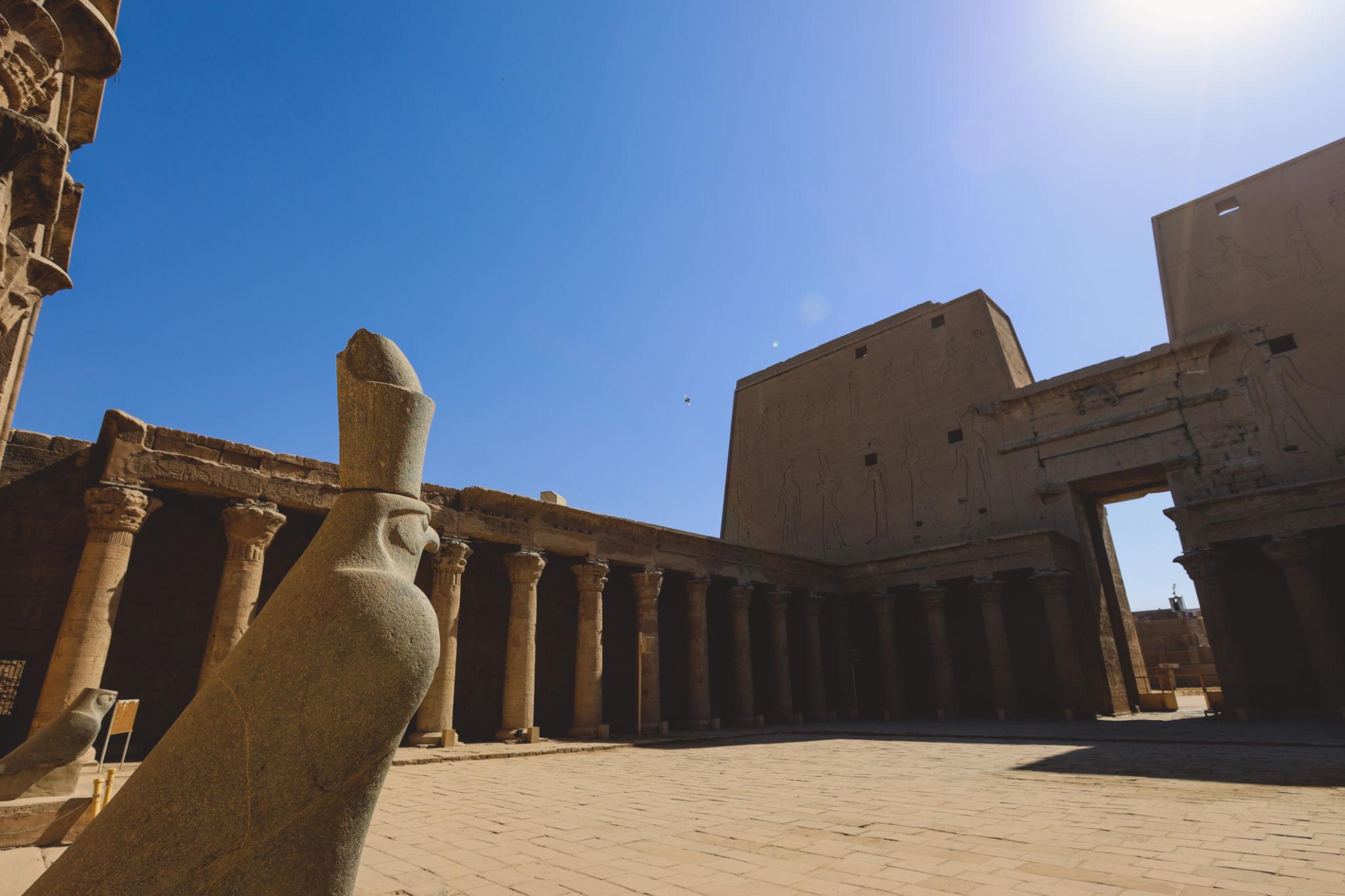
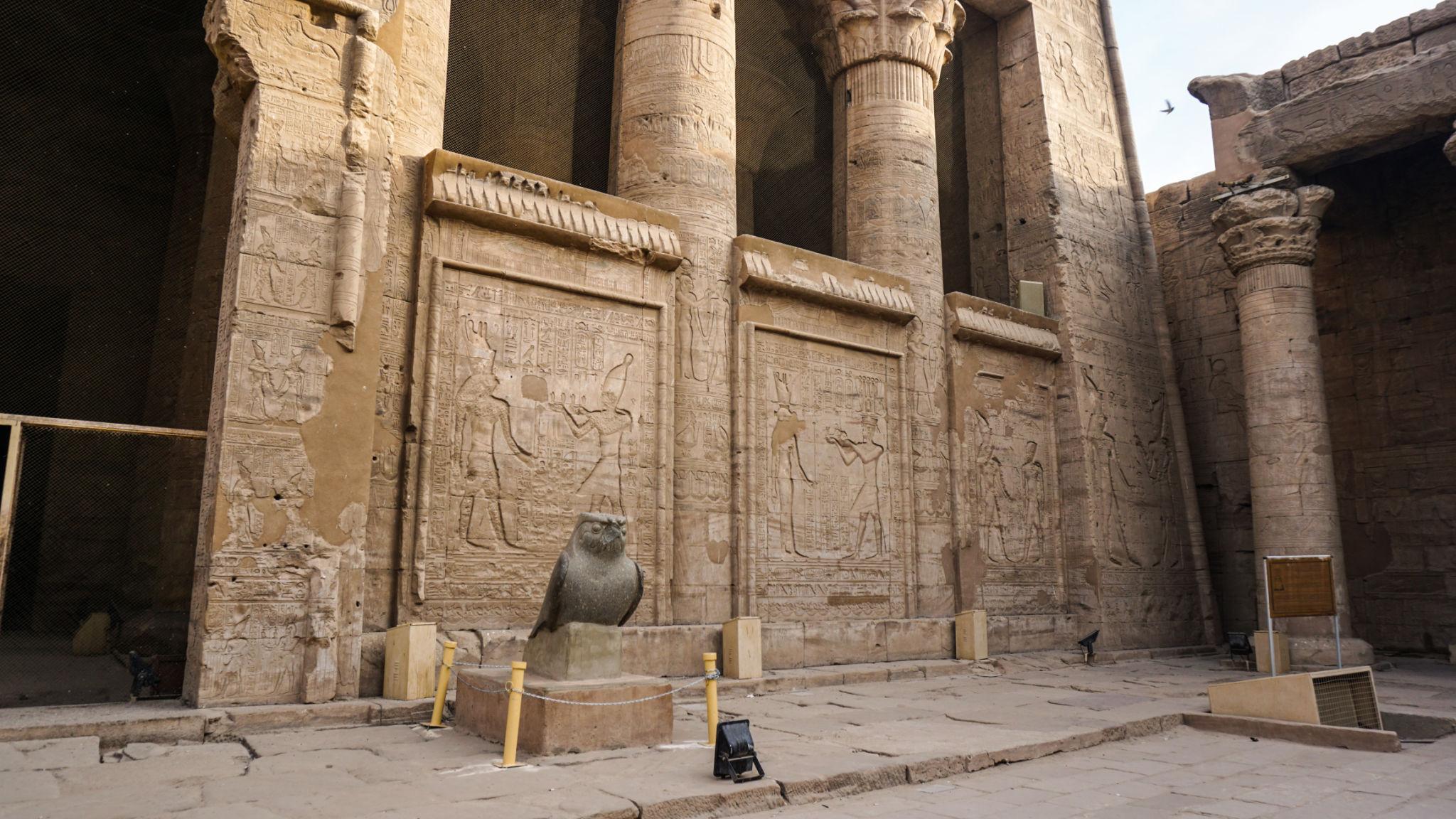
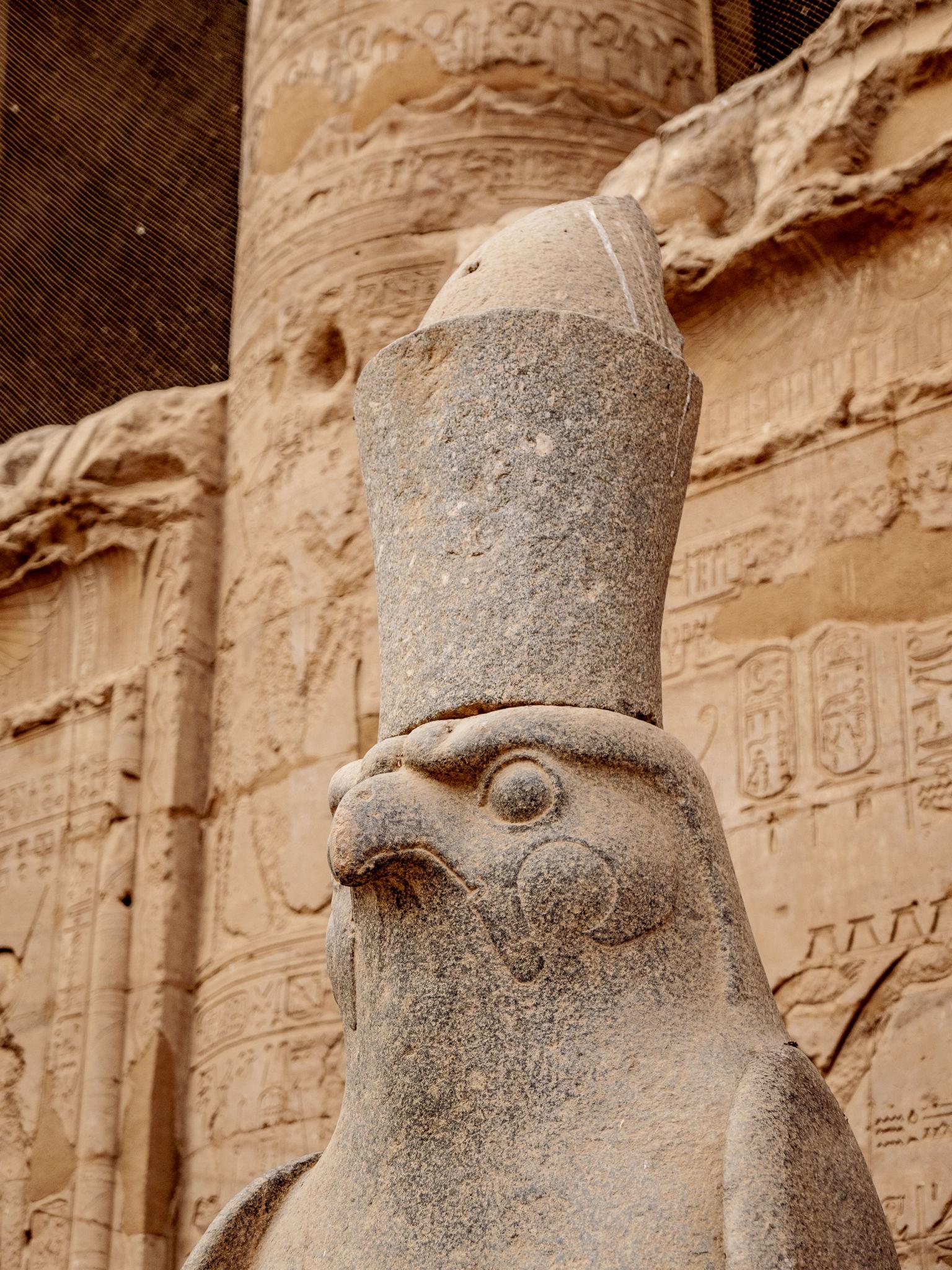
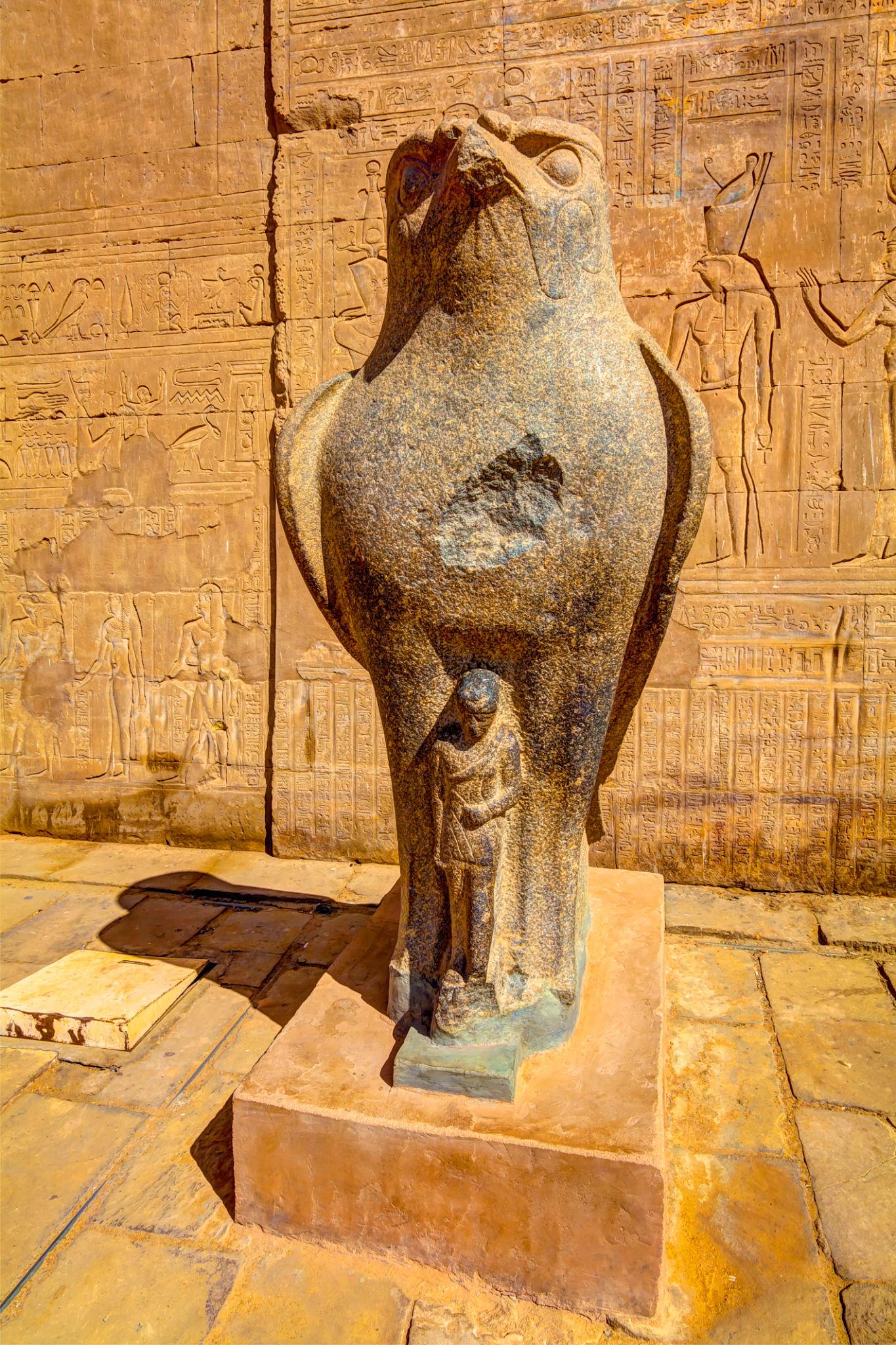
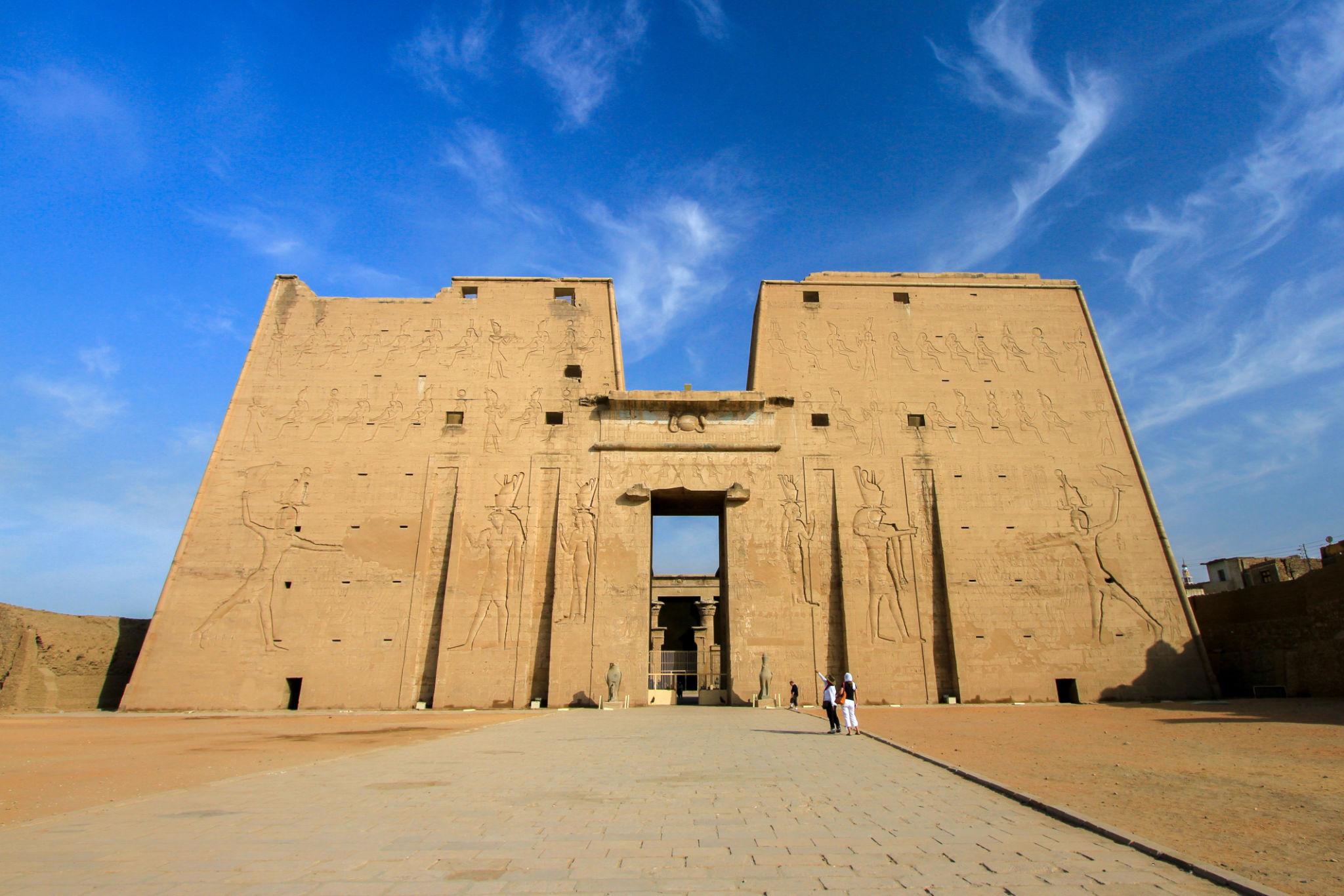
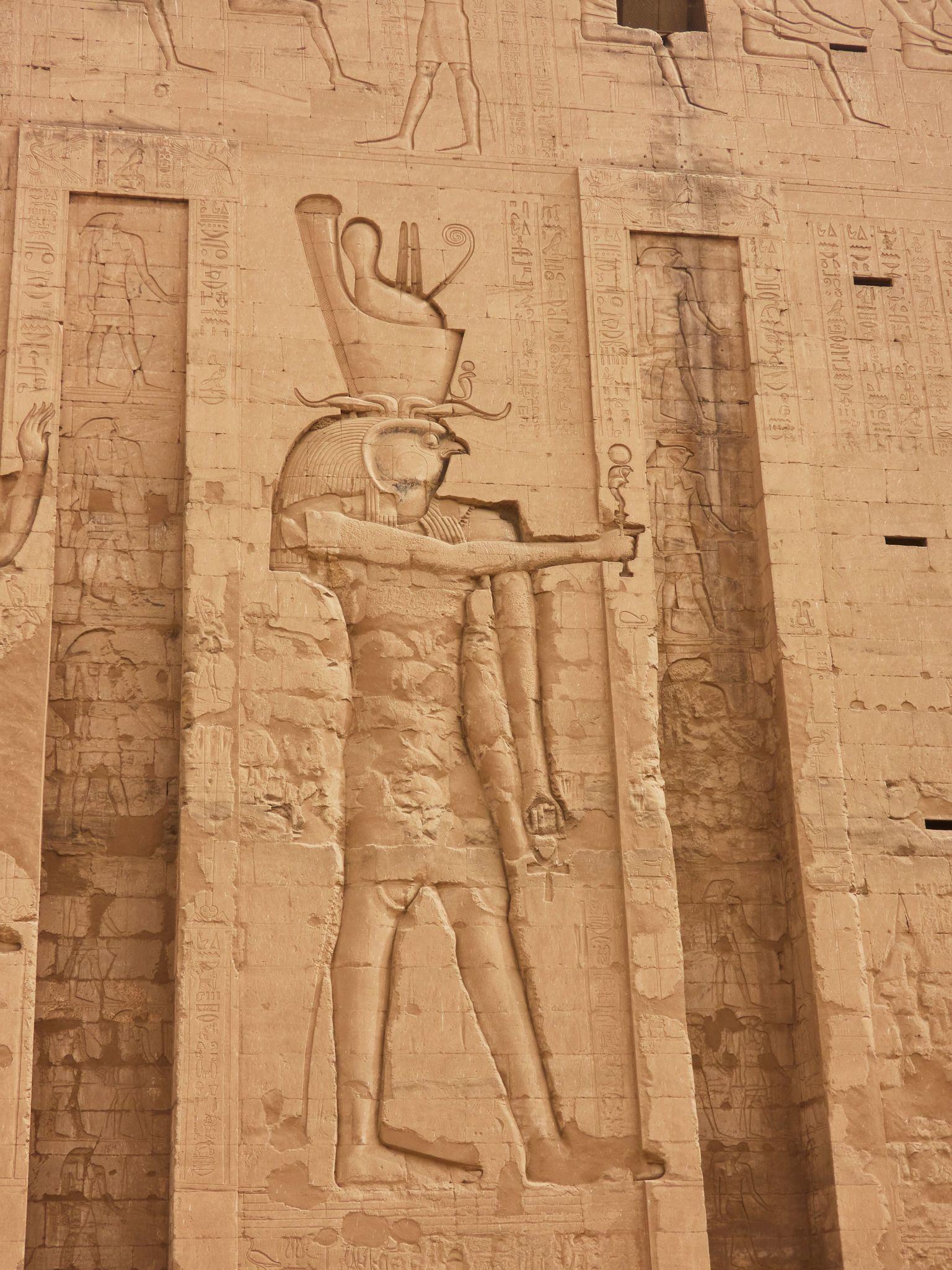
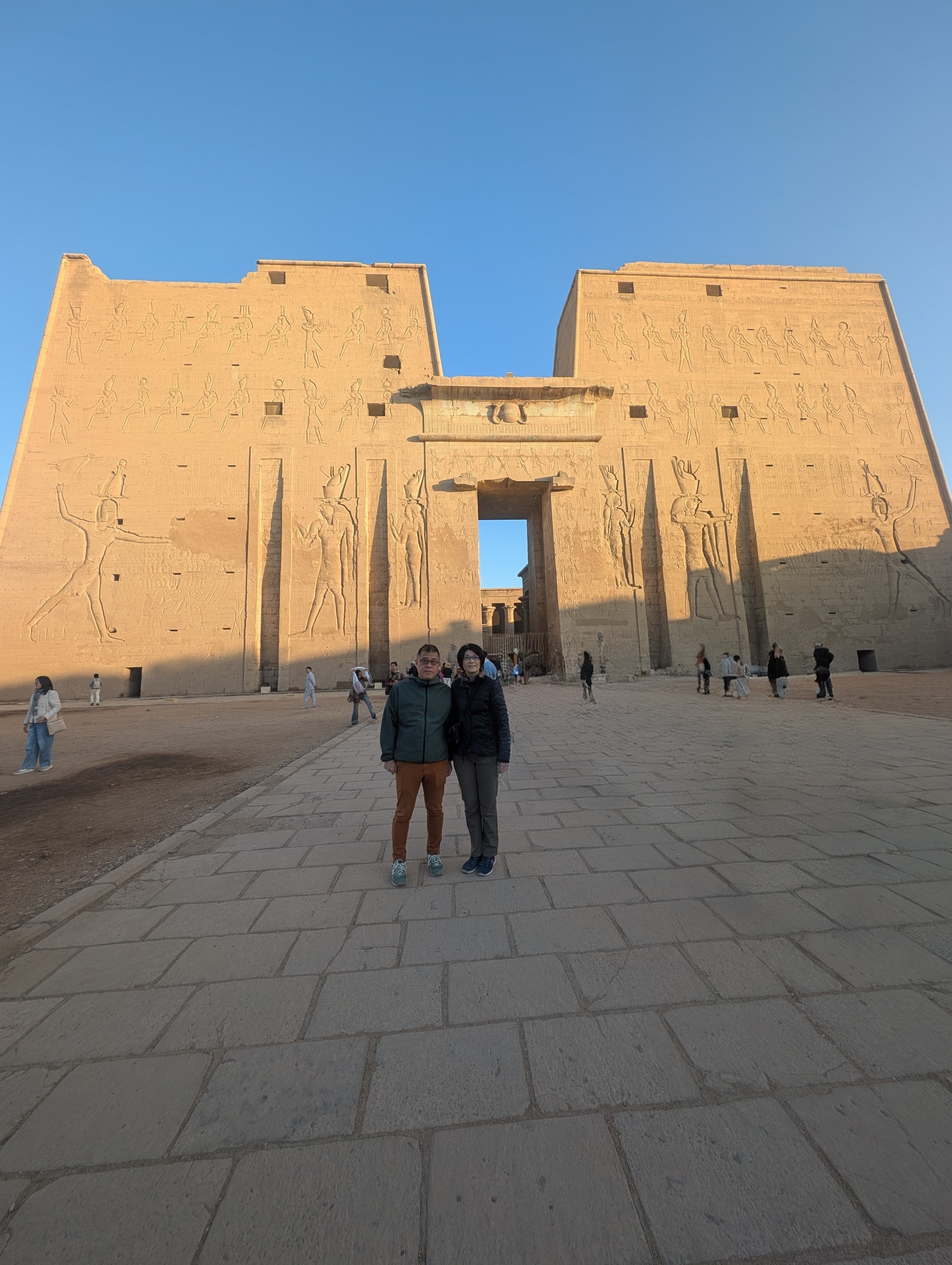
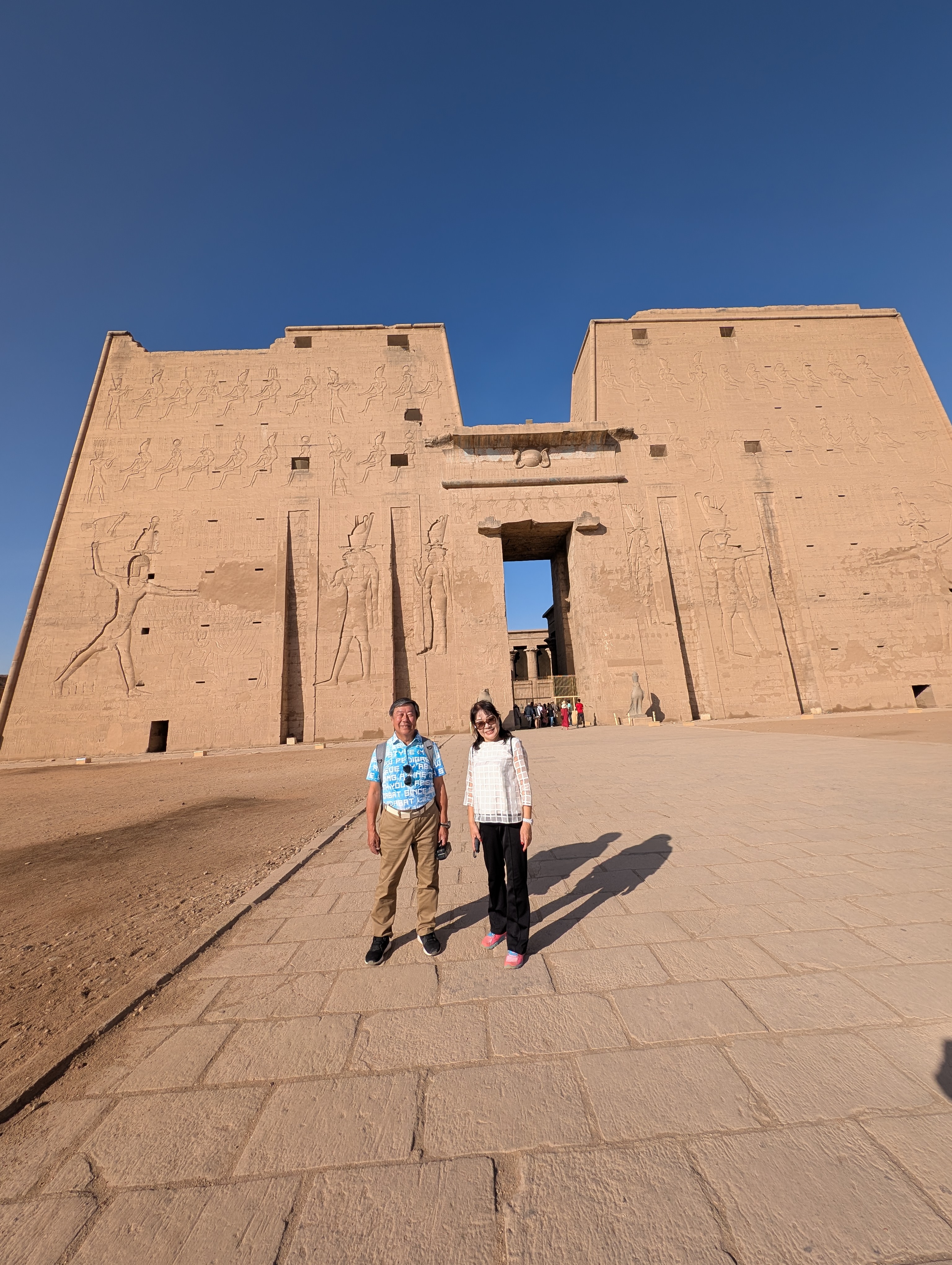
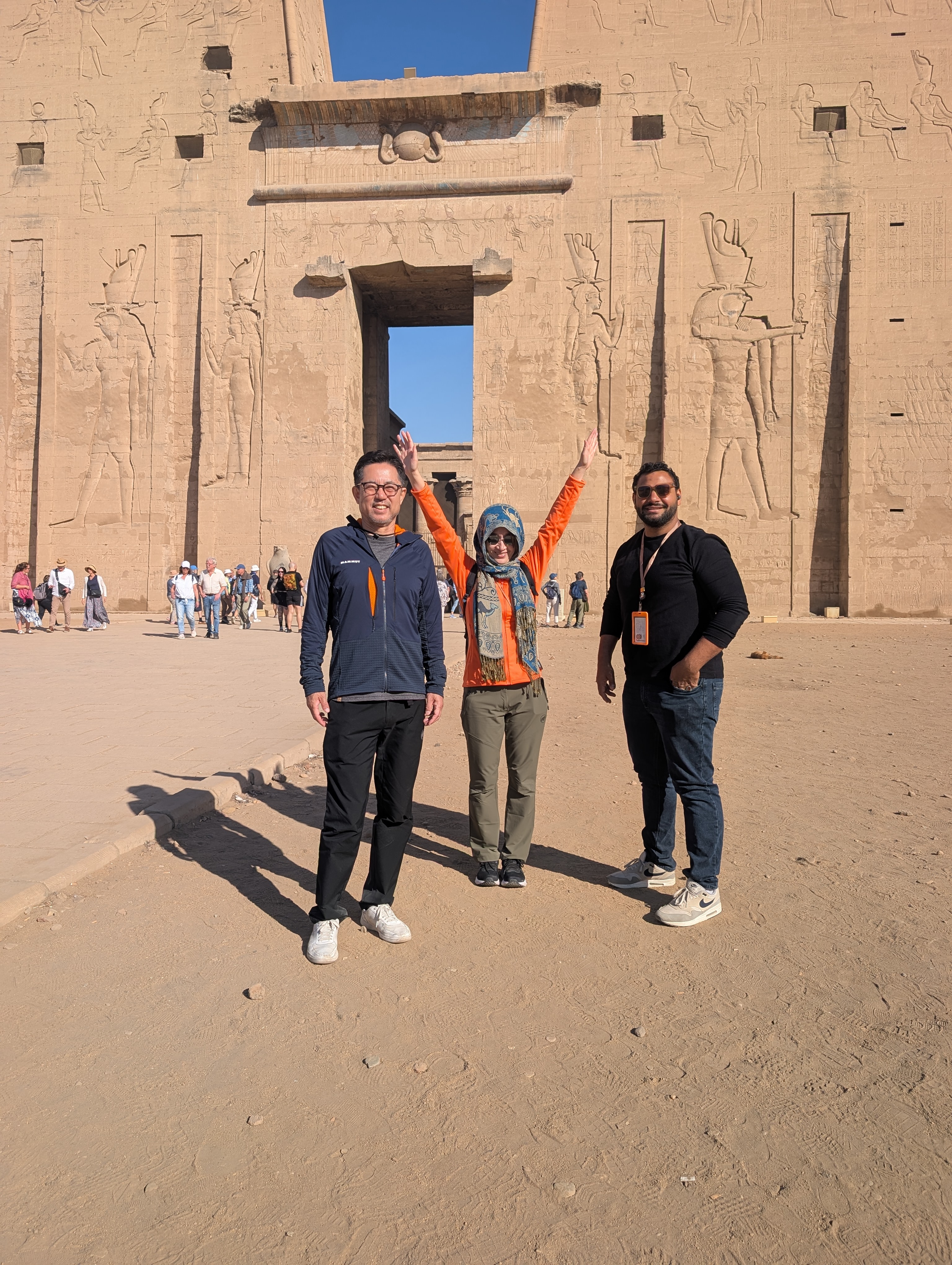
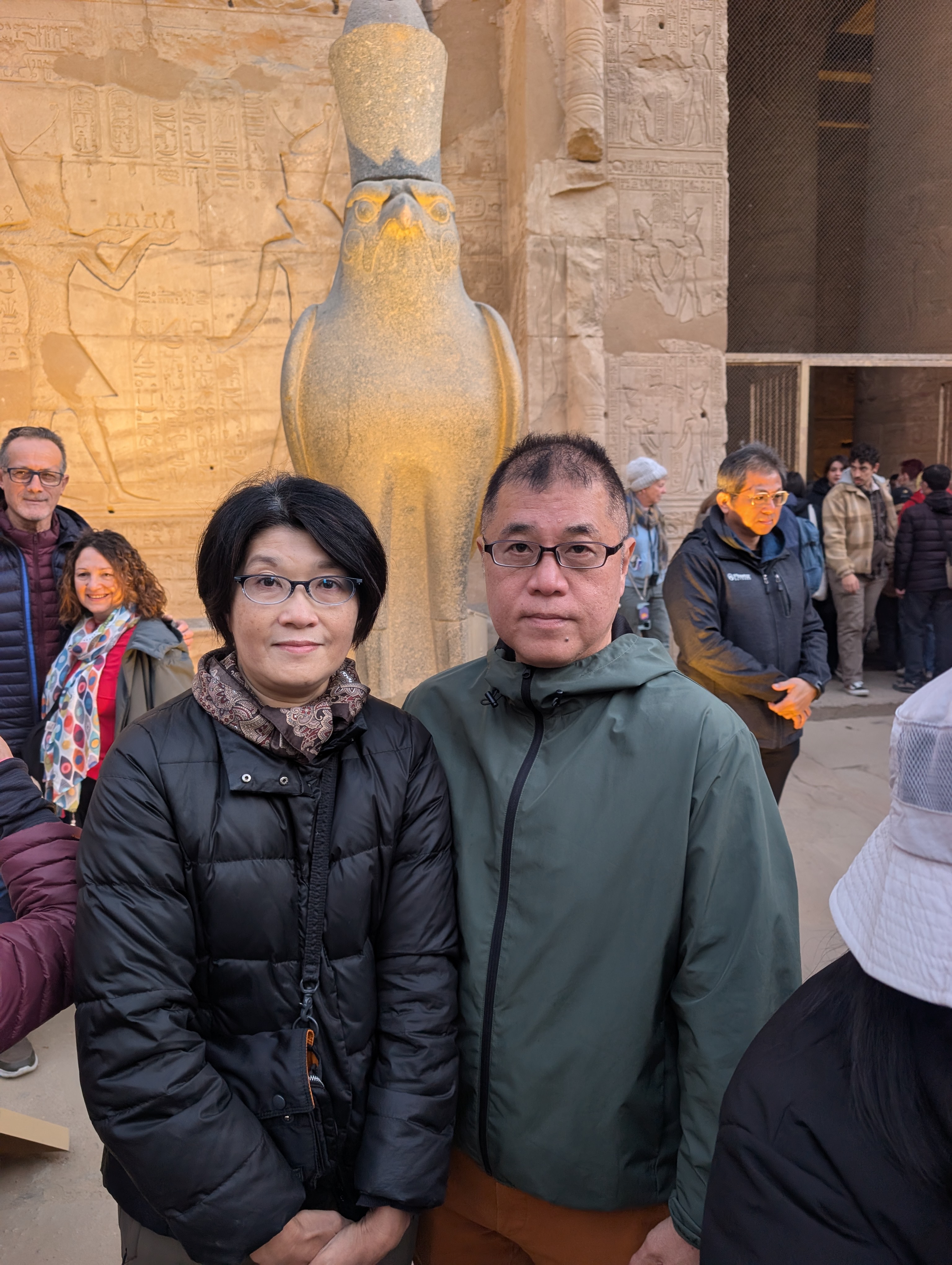
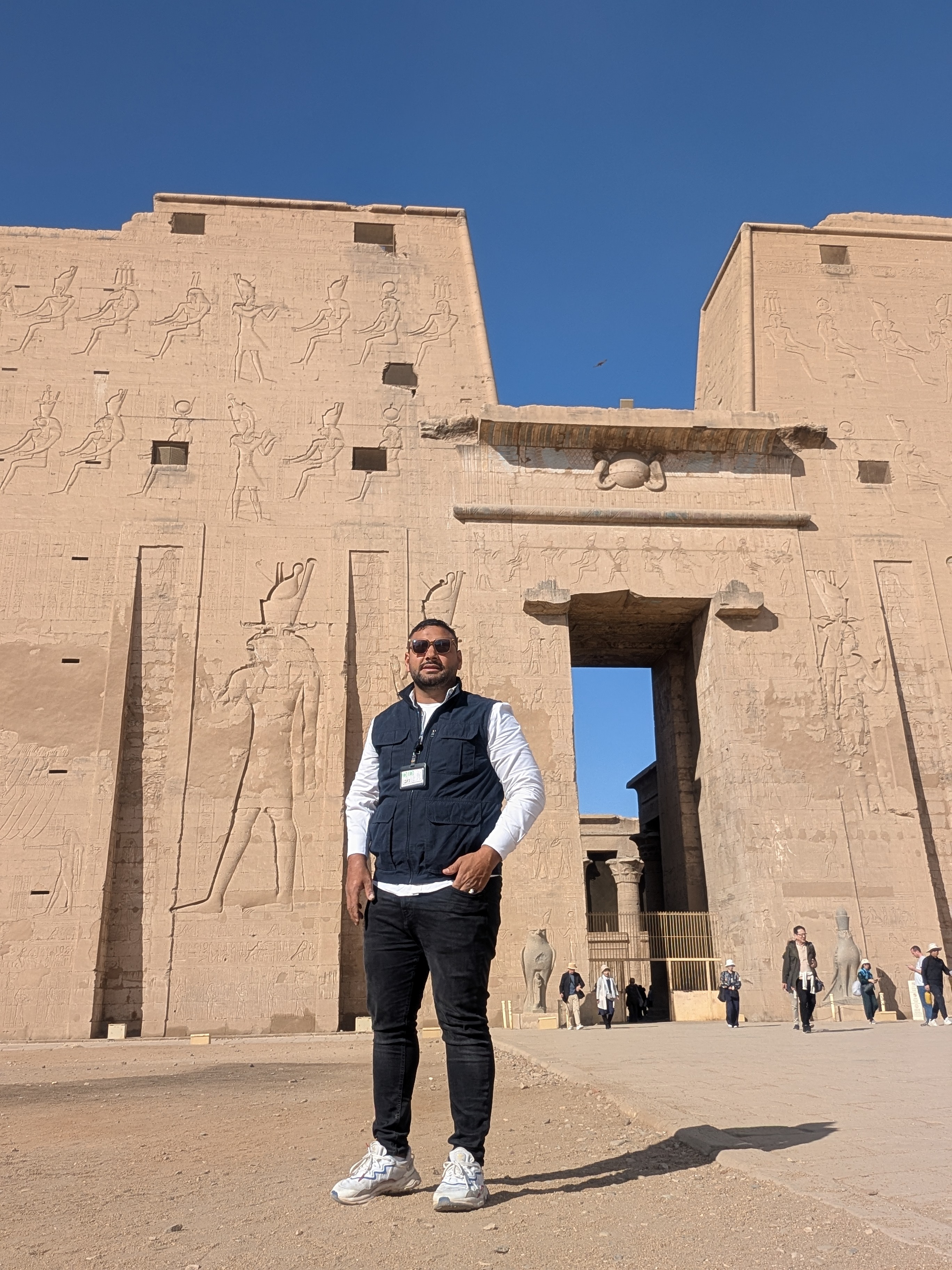
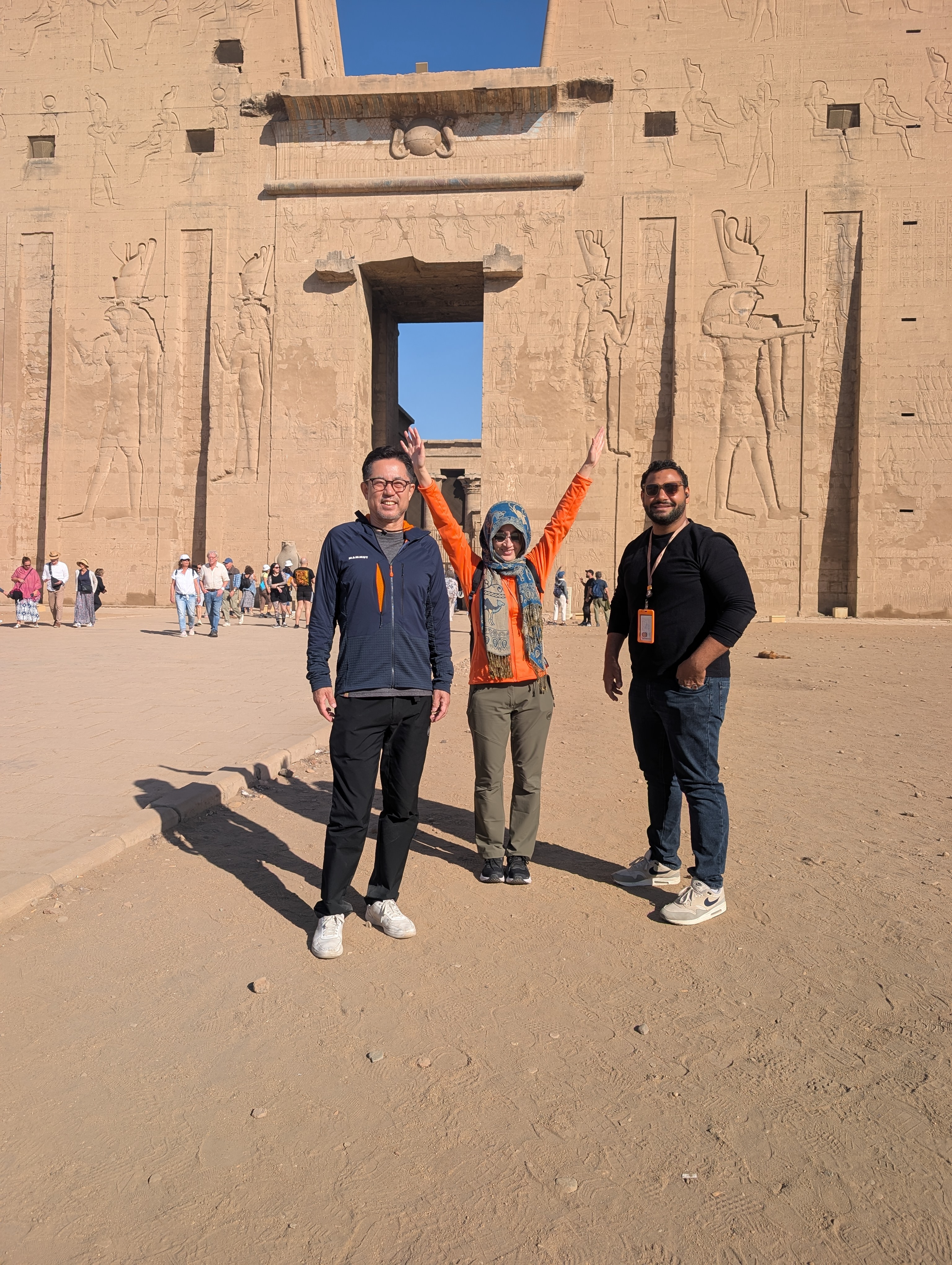
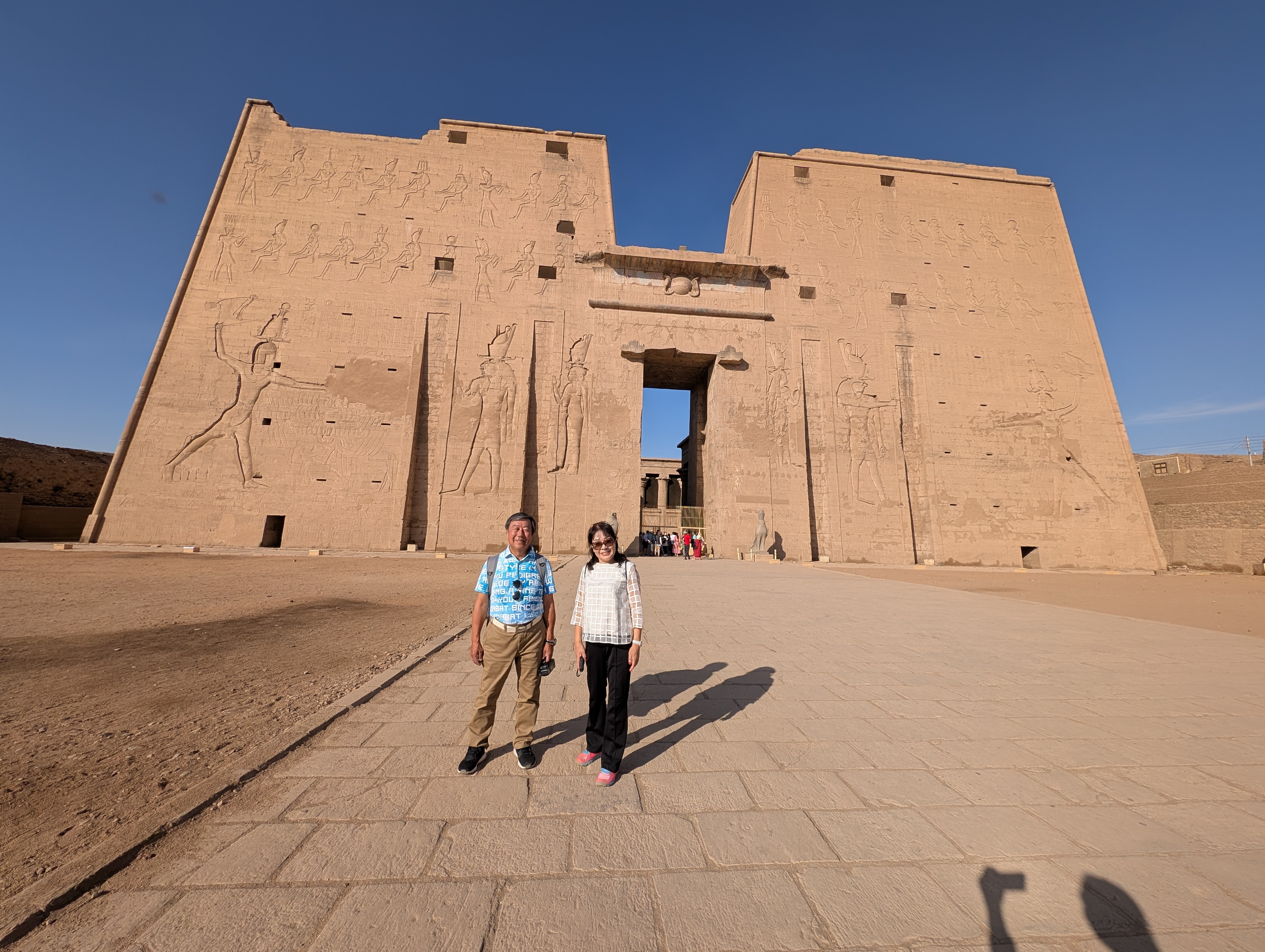
The massive 36-meter-high entrance pylon — one of the largest surviving temple gateways in Egypt — dominates the approach with its sheer vertical face carved with enormous reliefs of Ptolemy XII smiting his enemies before the falcon god Horus, a scene of ritual violence that has been repeated on Egyptian temple walls for three thousand years. Two magnificent granite falcon statues wearing the double crown of Upper and Lower Egypt stand guard at the entrance, their polished surfaces gleaming in the sun — these are among the most photographed and iconic images in all of Egyptian temple architecture. The pylon's twin towers originally held tall cedar flagpoles in their niched grooves, from which brightly colored pennants would have streamed in the Nile breeze, marking the temple as sacred space visible for miles. Walking through the pylon's central doorway, the sudden transition from the vast open forecourt into the temple's interior creates a powerful threshold experience — the ancient architects designed this moment of passage to make visitors feel they were leaving the mundane world and entering the realm of the gods.
Court of Offerings
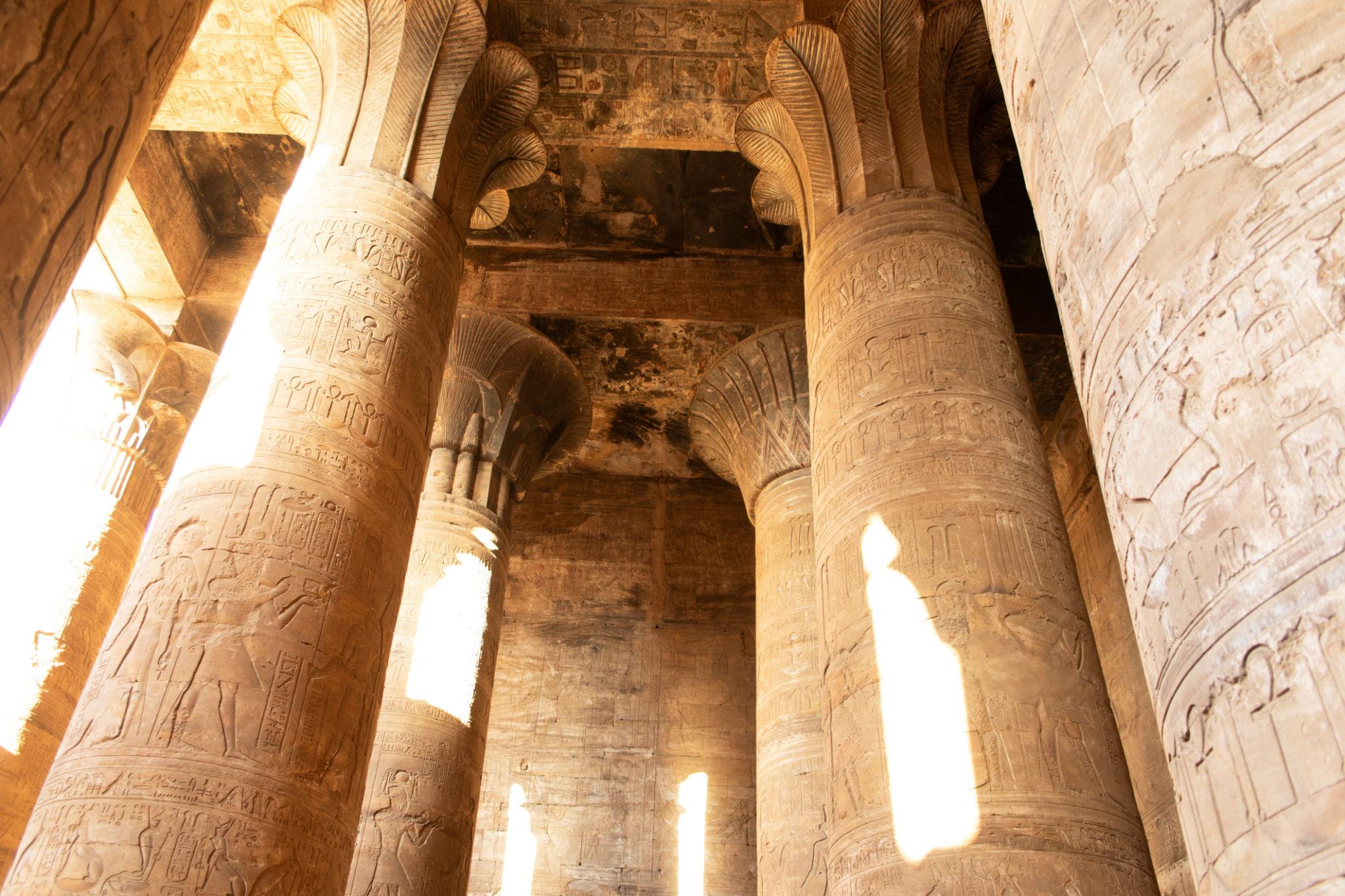
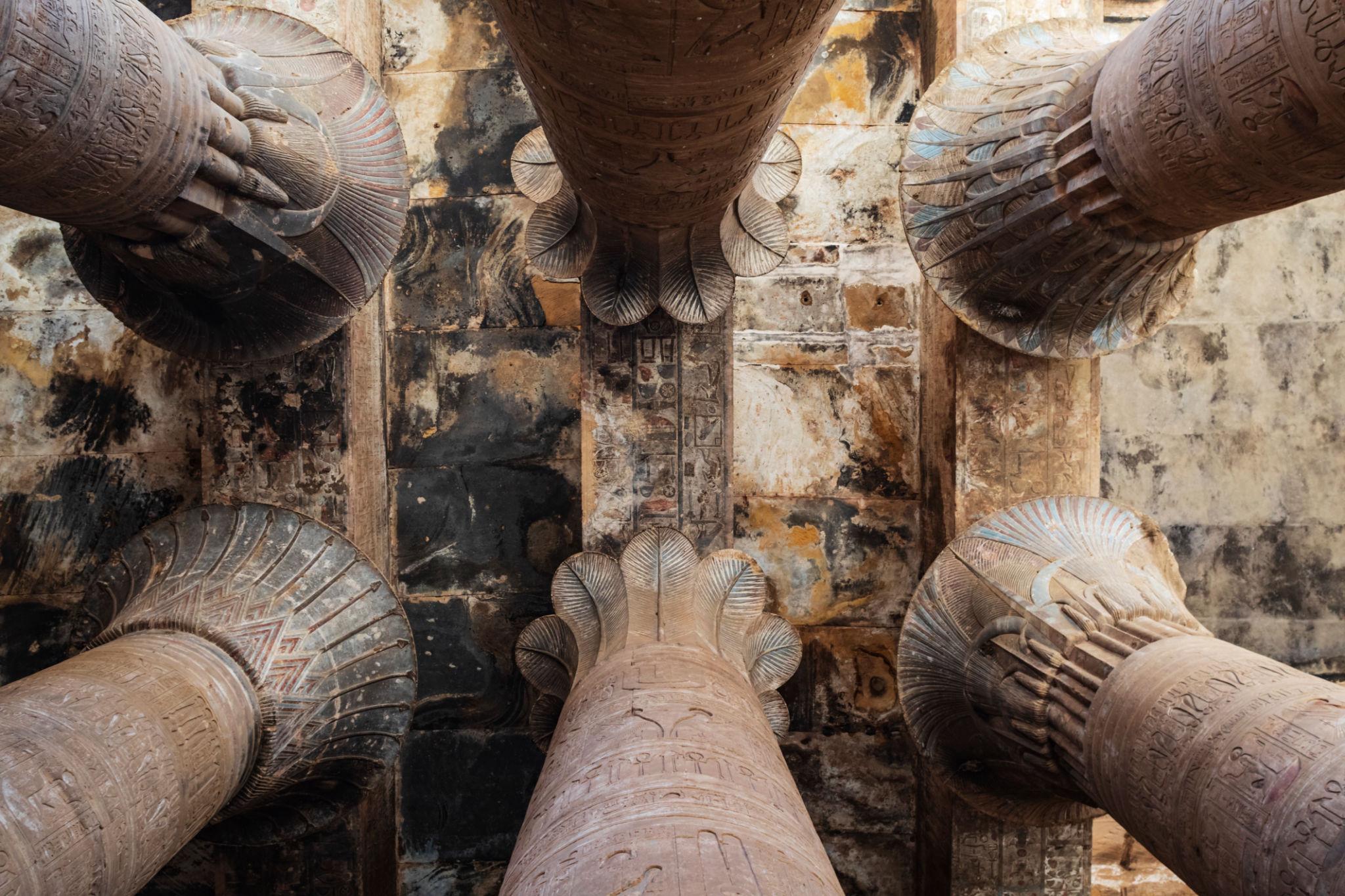
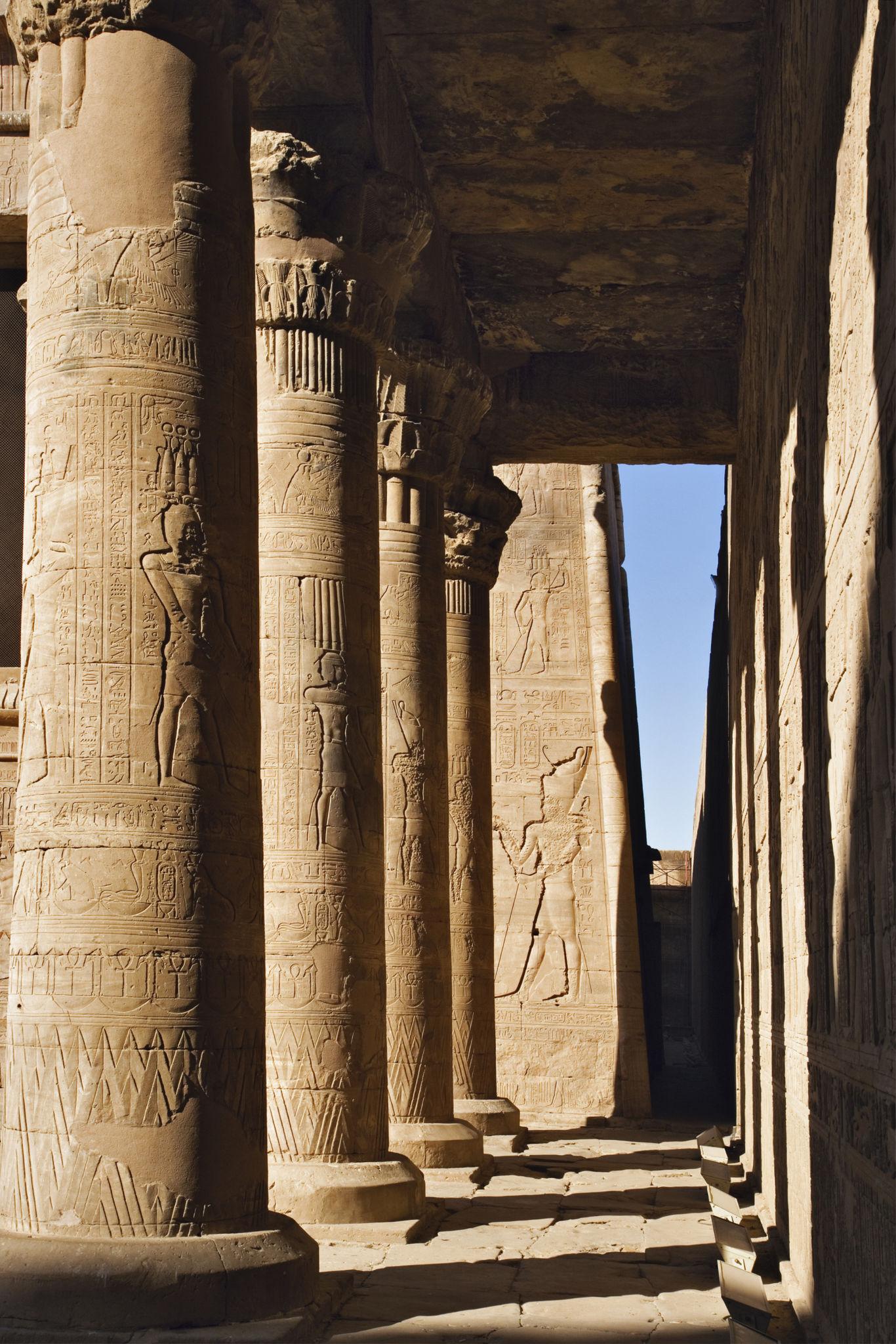
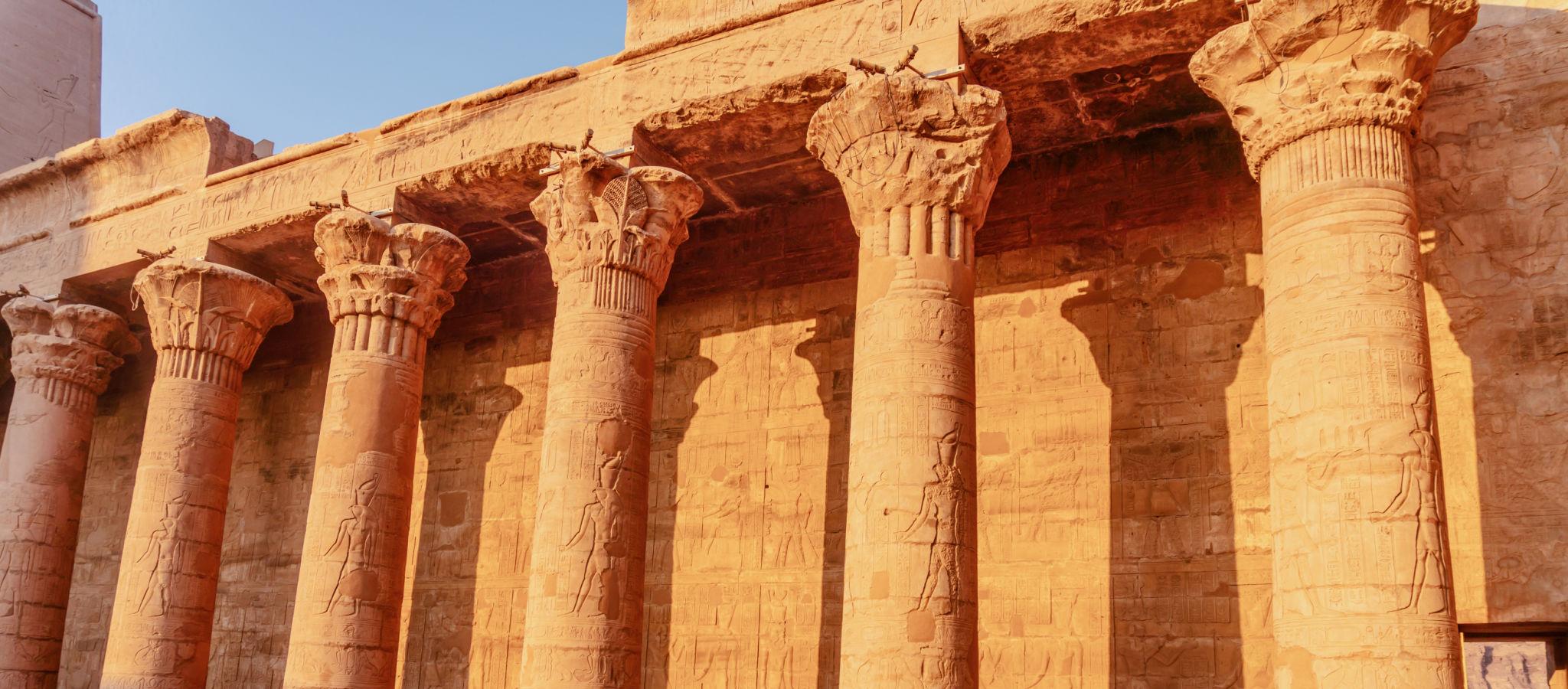
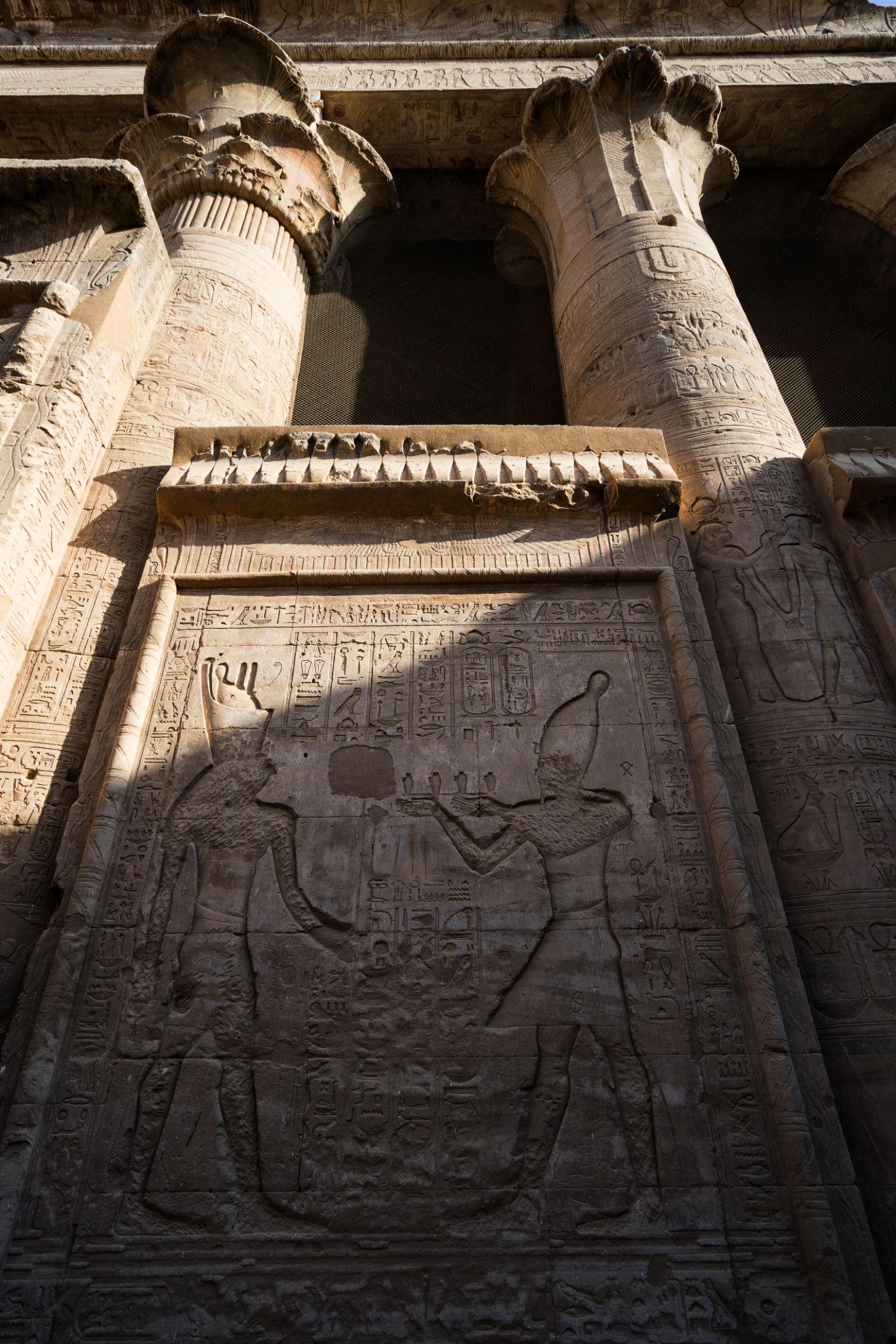
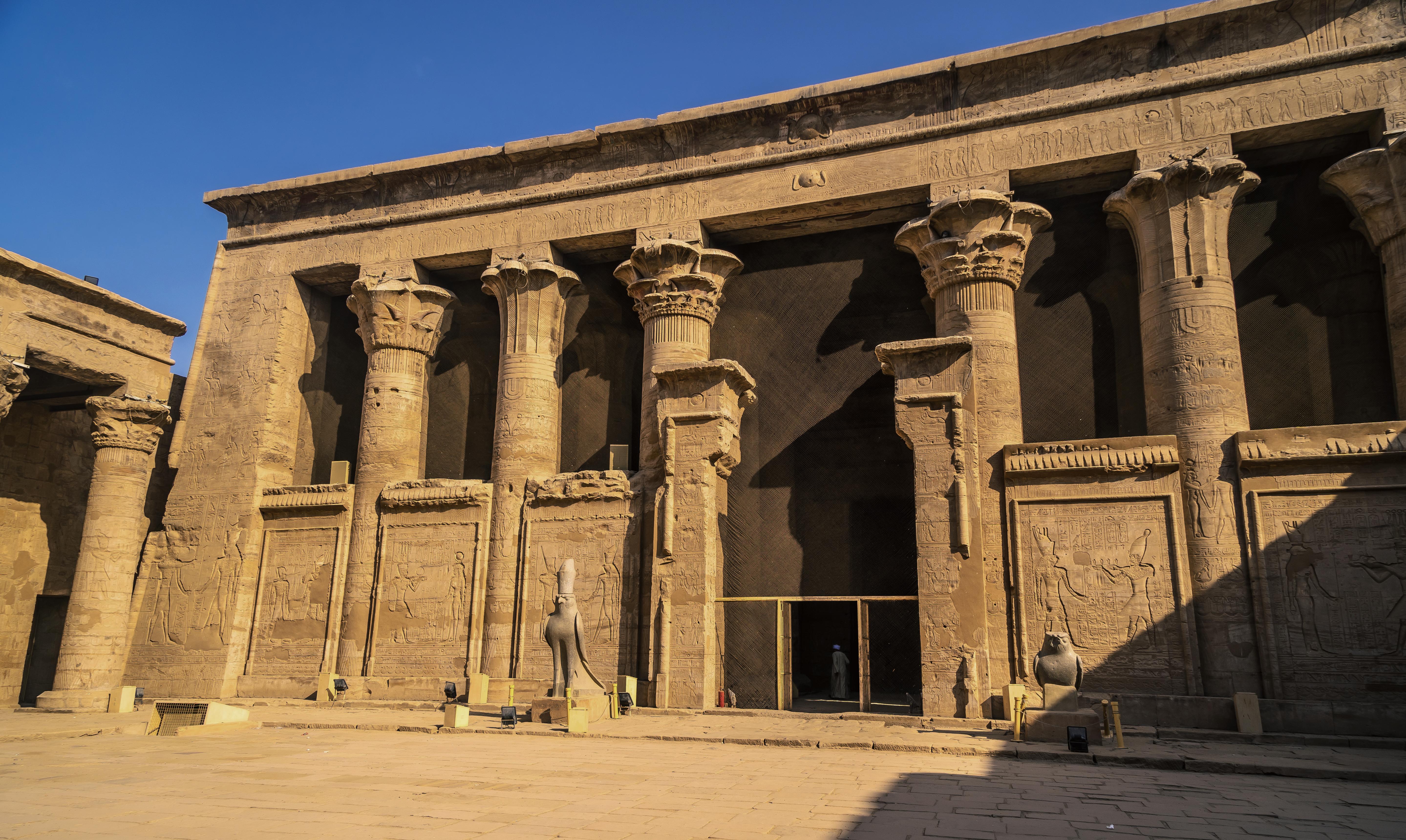
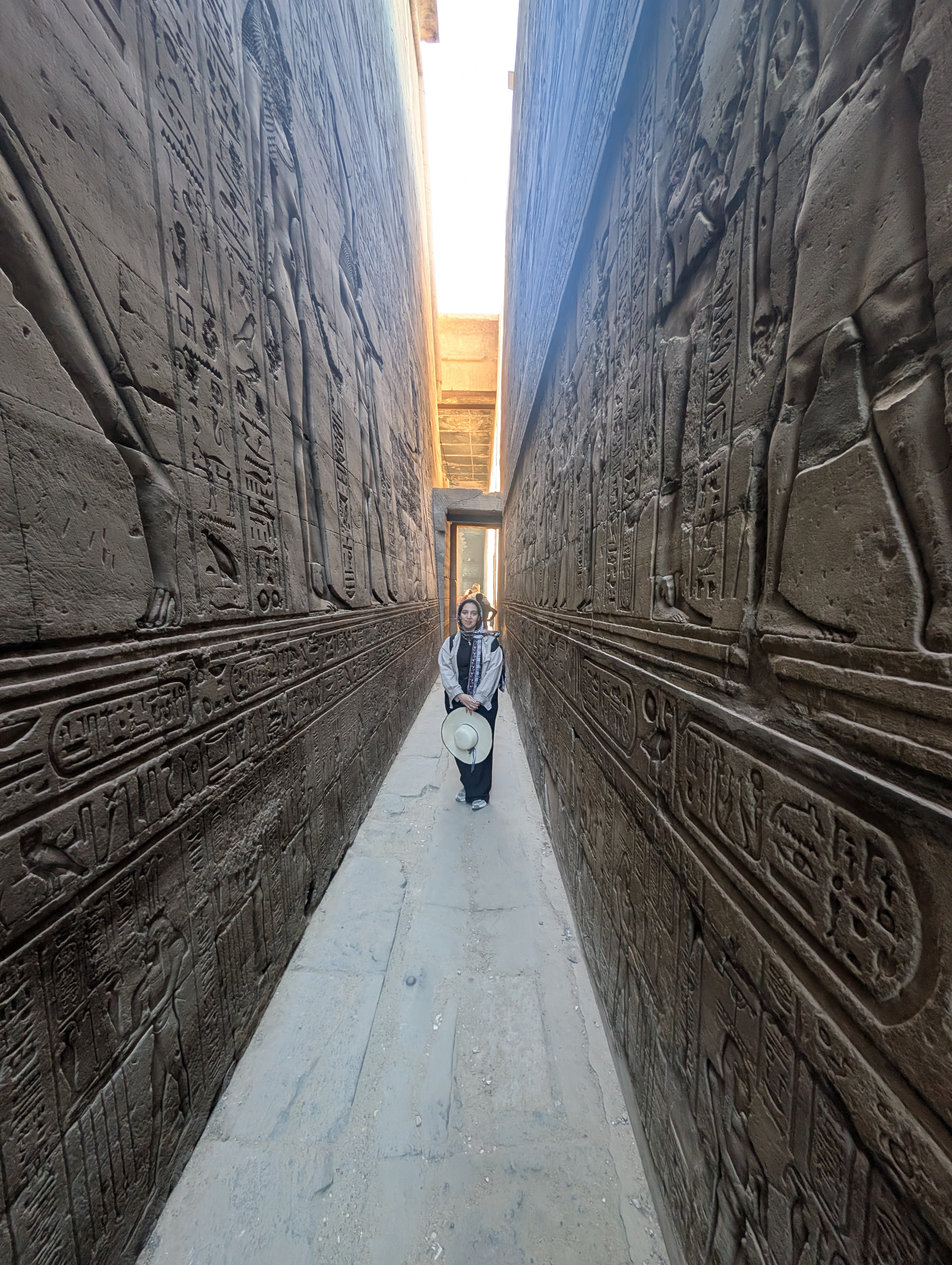
A grand open courtyard flooded with sunlight and surrounded by 32 elegant columns with varied floral capitals — palm fronds, papyrus bundles, and composite designs — creating a forest of stone that frames the bright Egyptian sky above. This was the public heart of the temple, where rituals, festivals, and animal sacrifices were performed before crowds of worshippers who were not permitted to enter the darker inner chambers beyond. The walls are covered in detailed reliefs depicting the Festival of the Beautiful Meeting — the annual celebration when the cult statue of Hathor was carried by sacred barque from her temple at Dendera, over 100 km upriver, to visit her husband Horus at Edfu for a two-week reunion that involved elaborate processions, music, dancing, and feasting. The festival reliefs are among the most detailed records of ancient Egyptian religious ceremony to survive anywhere, providing Egyptologists with an almost step-by-step guide to how temple rituals were actually performed.
Hypostyle Halls
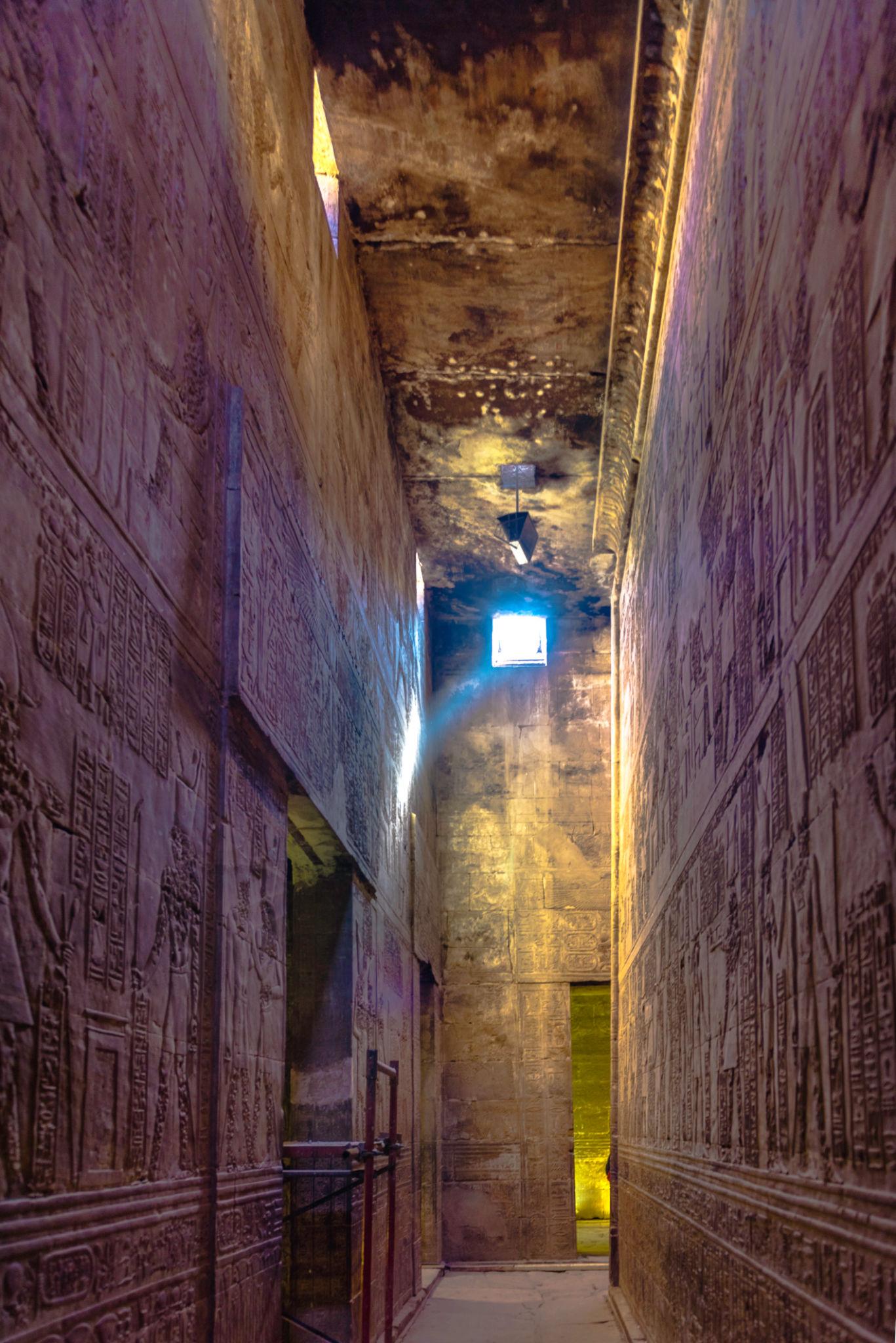
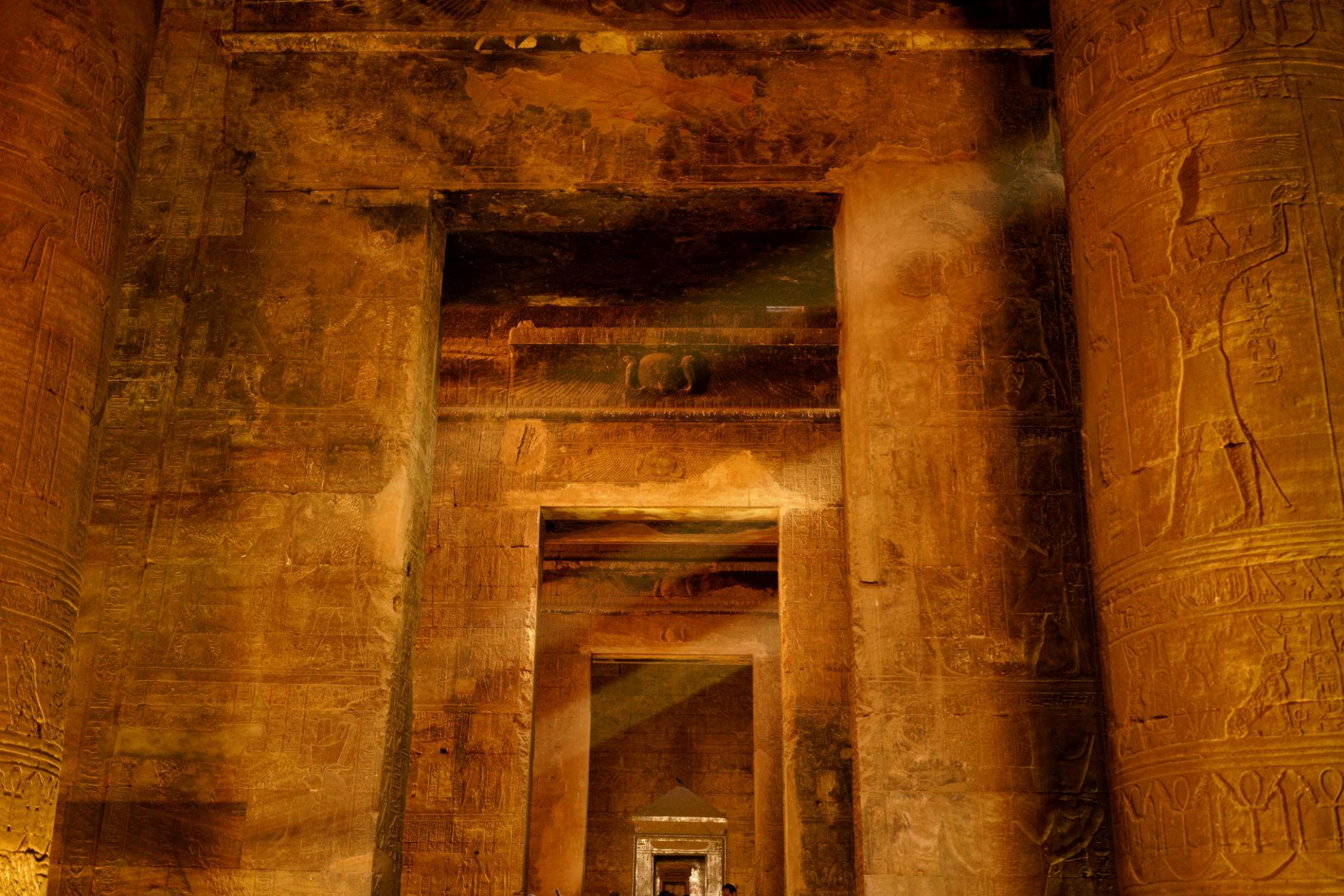
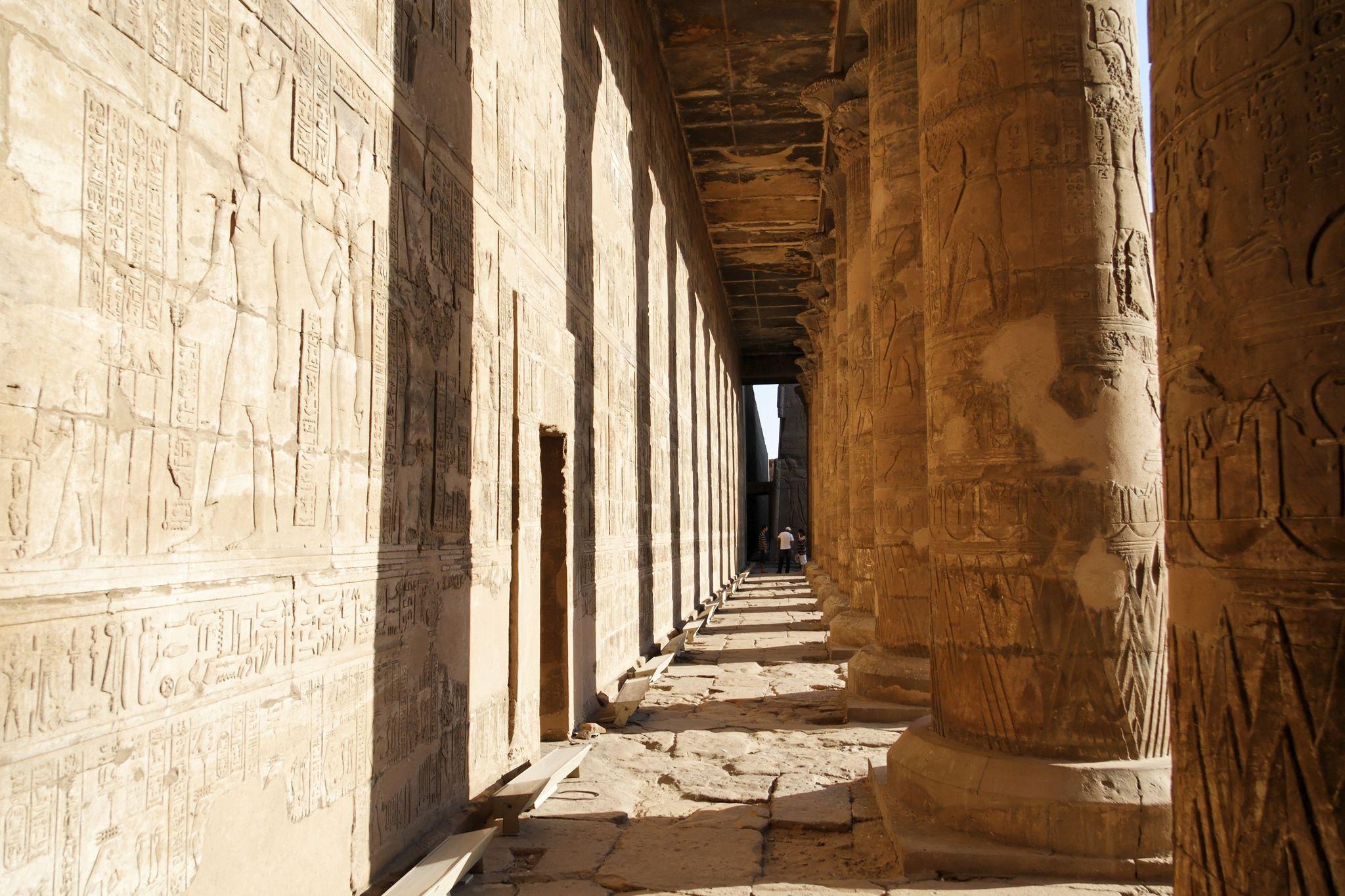
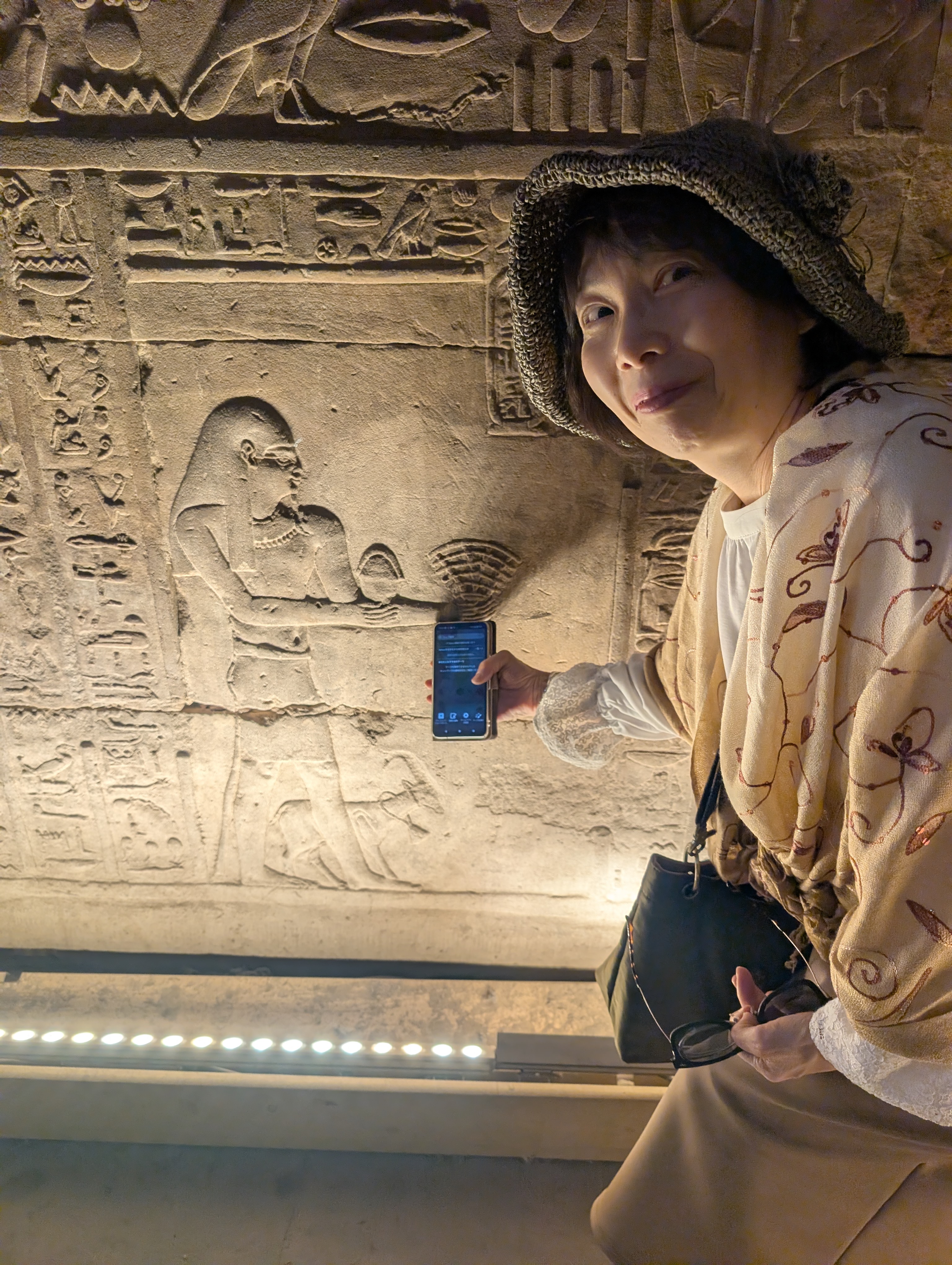
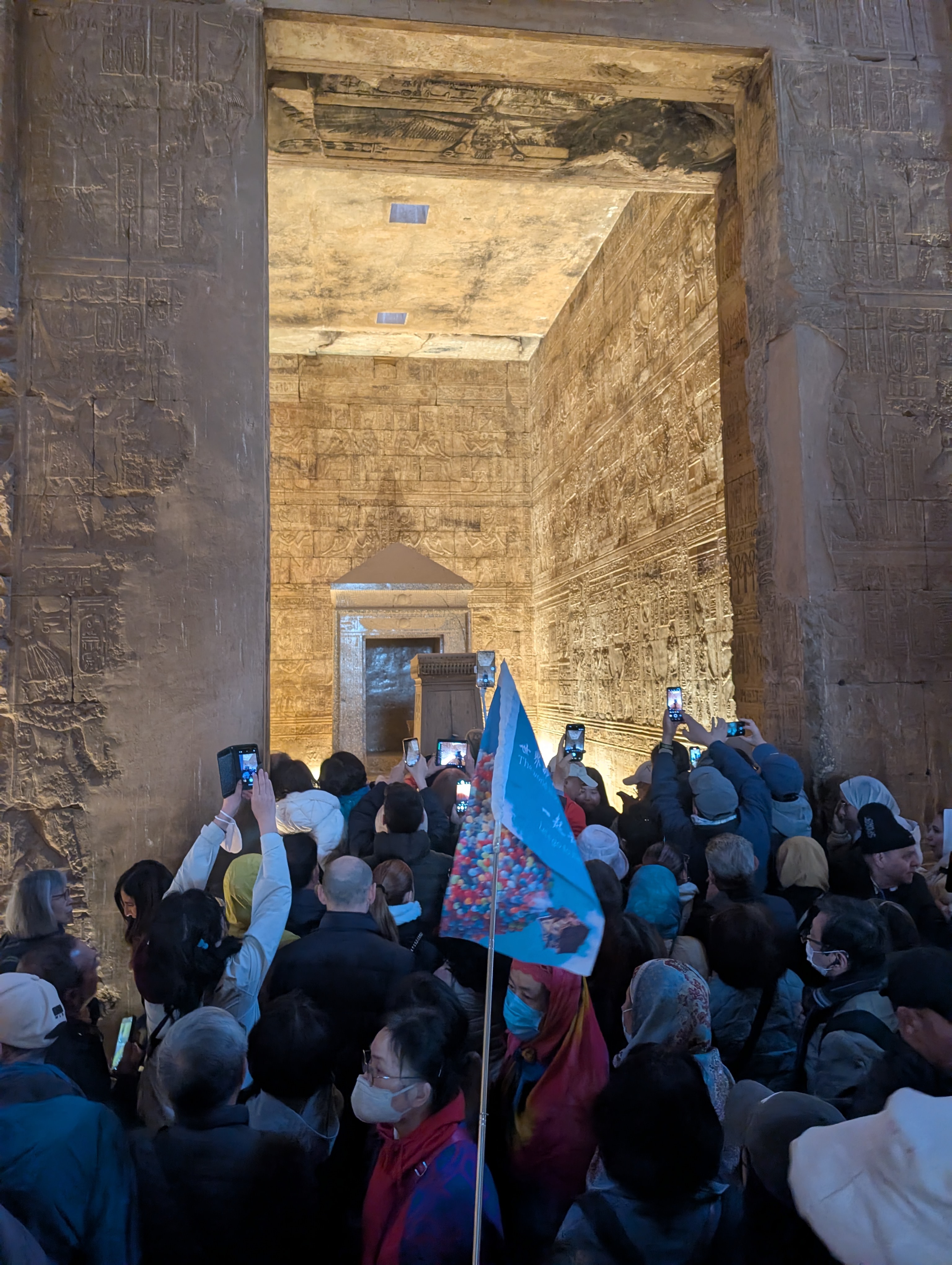
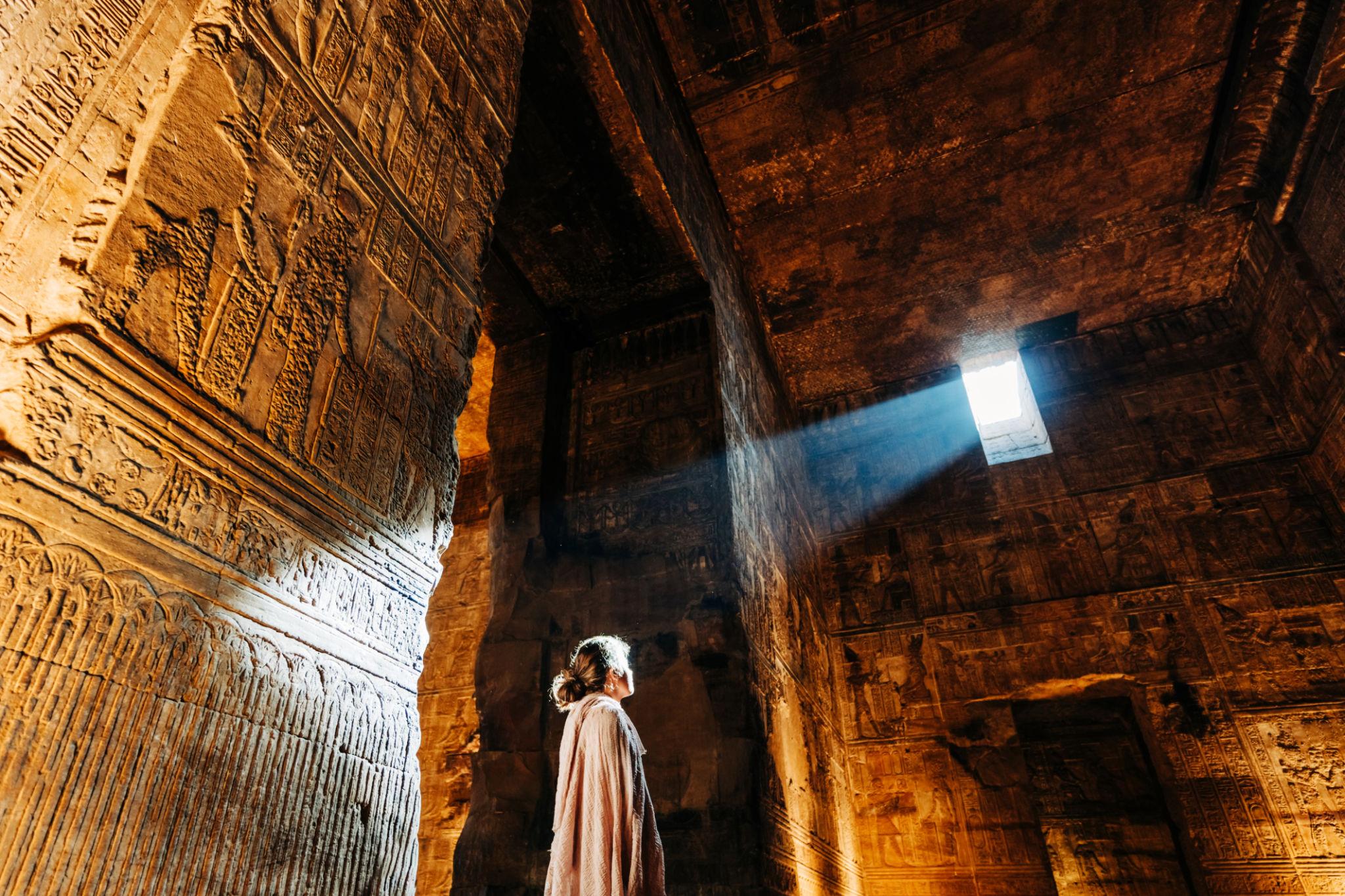
Two successive columned halls lead deeper into the temple, each darker and more confined than the last — a deliberate architectural progression that mirrors the increasing sanctity of the spaces as you approach the dwelling place of the god. Because the roof is entirely intact at Edfu (unlike most Egyptian temples where it has collapsed), visitors experience this transition exactly as the ancient priests did: from the blazing courtyard sunlight into a twilight of massive columns, and then into near-total darkness broken only by narrow light slits high in the walls. The first hall, the Outer Hypostyle Hall, has 12 columns and small openings that allow dramatic shafts of light to fall across the carved walls. The second, inner hall is darker still, its ceiling blackened by the soot of ancient oil lamps, and the walls here are inscribed with texts describing the temple's foundation rituals — including the ceremony of 'stretching the cord' to align the building with the stars.
The Sanctuary (Holy of Holies)
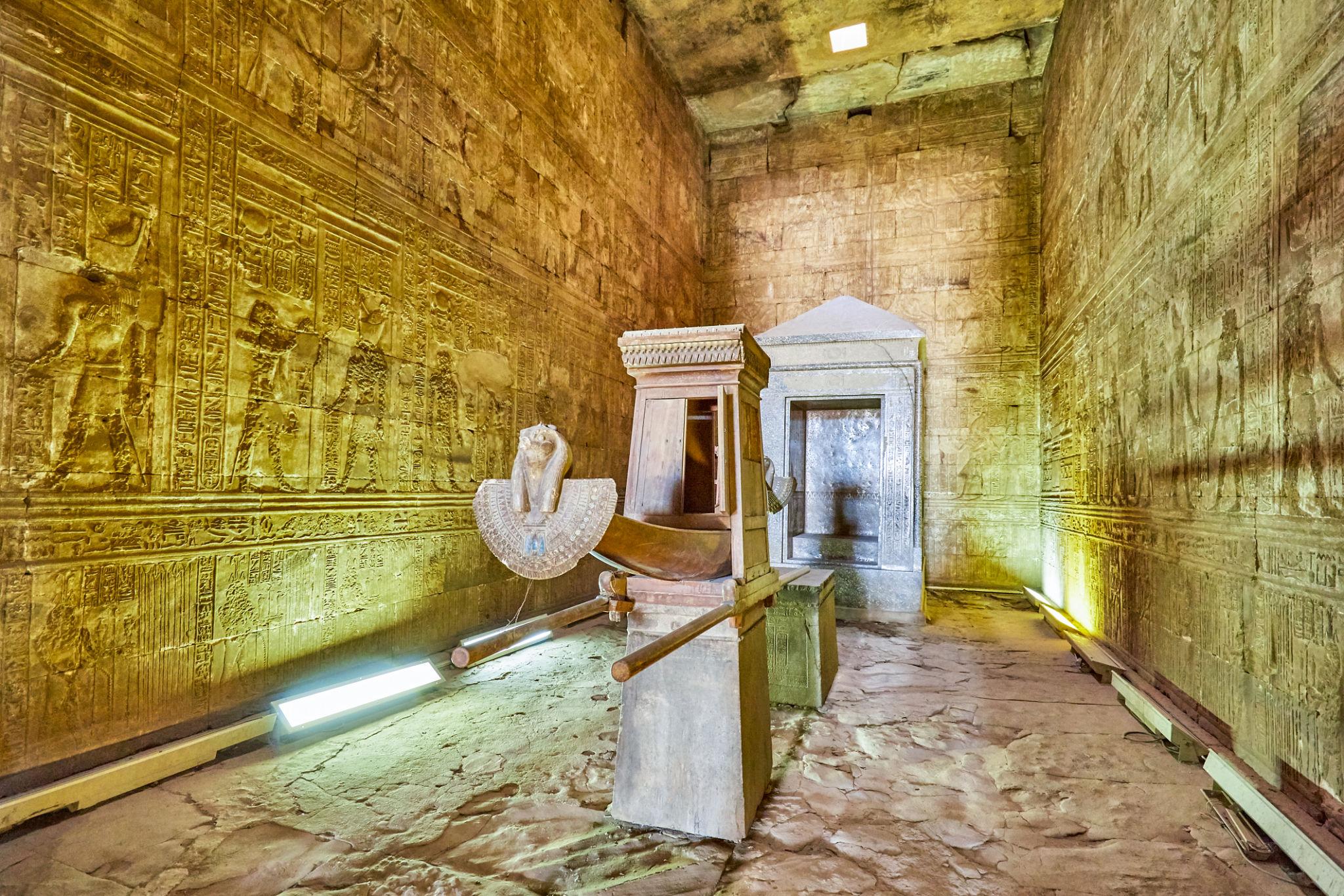
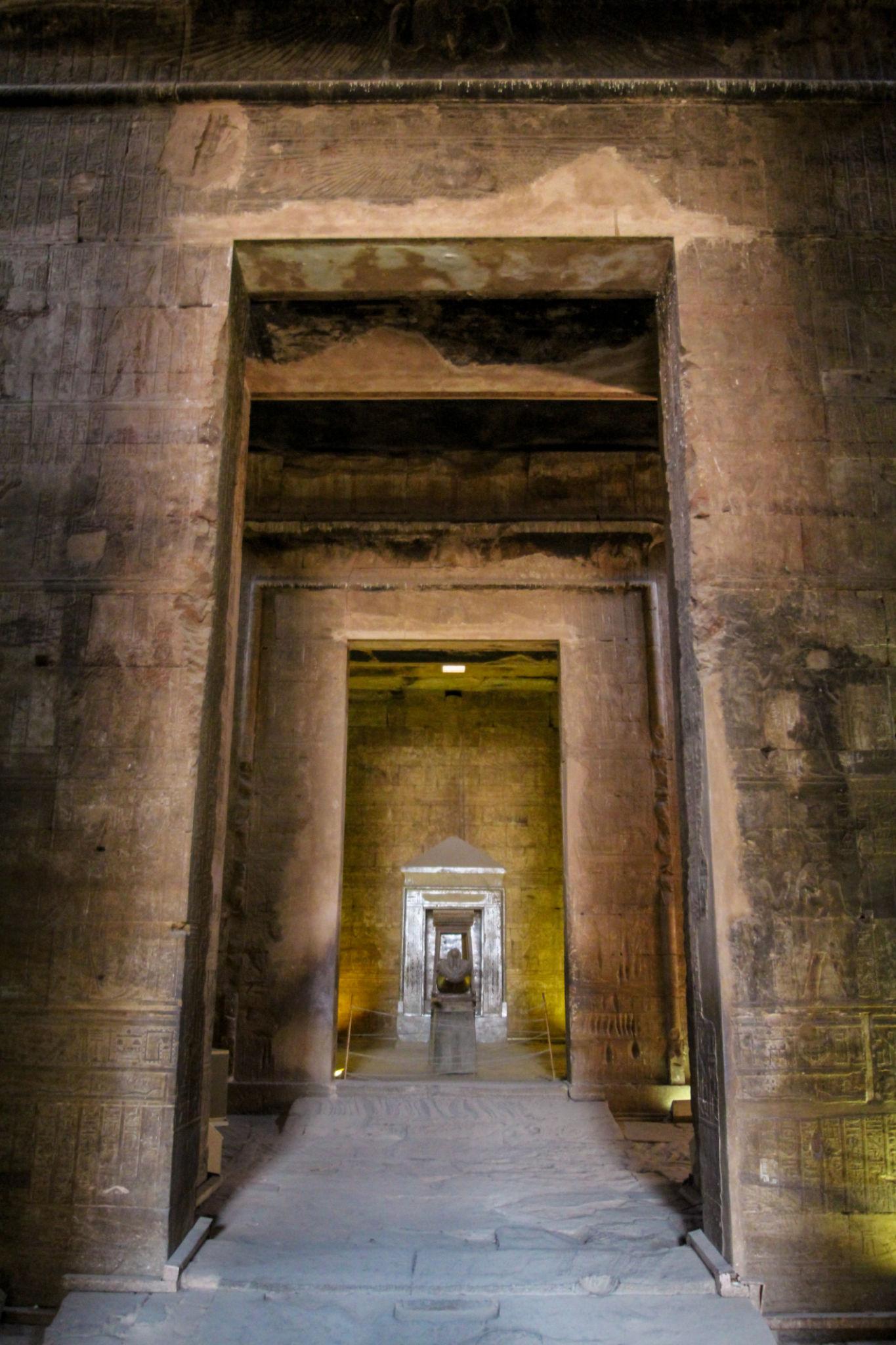
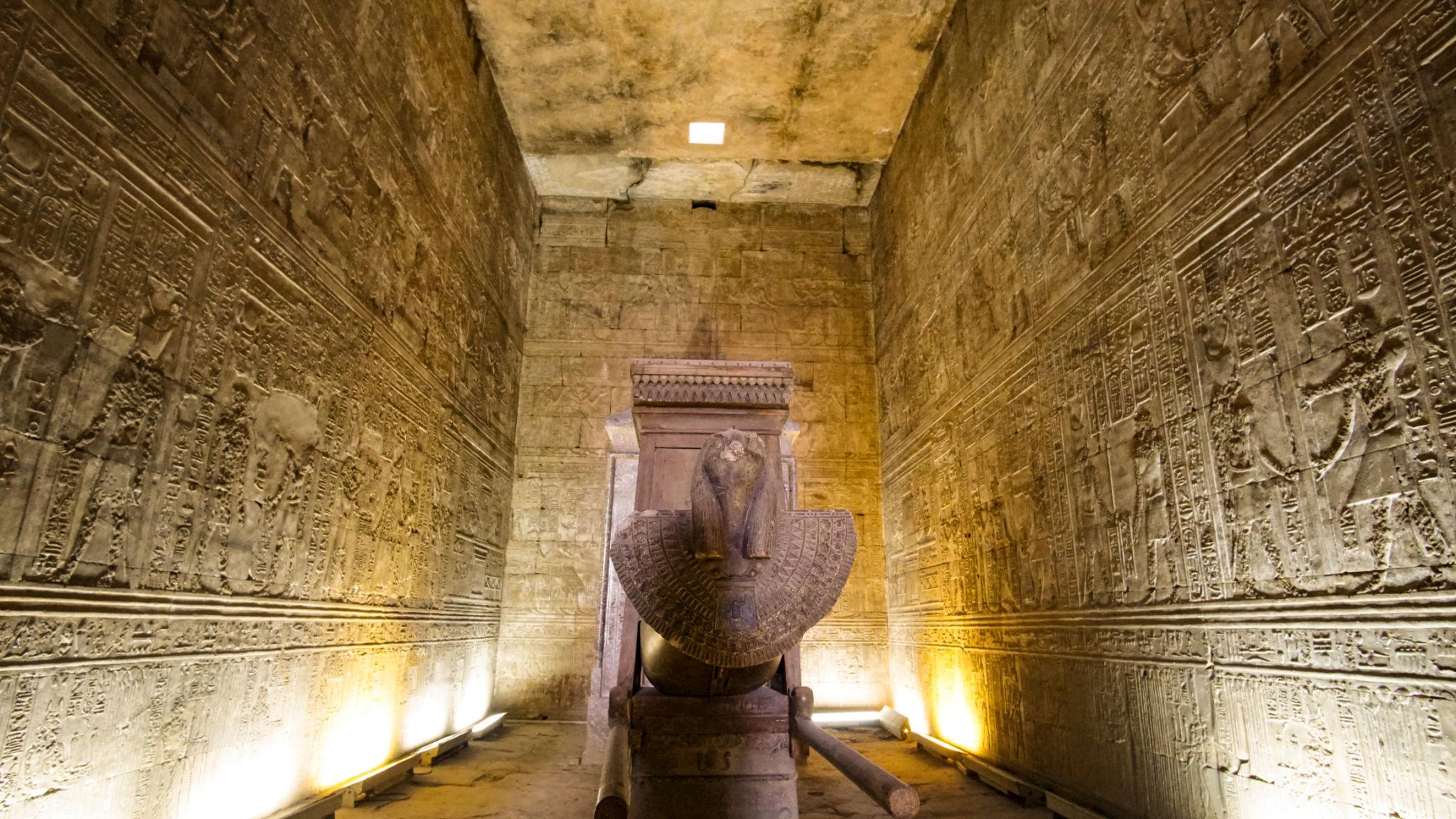
The innermost chamber — the most sacred space in the entire temple, where only the high priest was permitted to enter — still contains the original polished grey granite naos (shrine) that once held the golden cult statue of Horus, making it one of the most complete ancient sanctuaries in Egypt. The naos stands about four meters tall, carved from a single block of stone, and its empty interior is both moving and evocative — you can almost sense the absence of the precious statue that once stood within. A modern replica of the sacred barque (the gilded wooden processional boat used to carry the god's statue during festivals) sits before the naos, giving visitors a vivid sense of how the cult functioned in practice. The walls surrounding the sanctuary are covered in scenes showing the daily temple ritual: the high priest breaking the clay seal on the shrine, opening its doors, anointing the statue, clothing it, and offering food — an intimate choreography repeated every dawn for centuries.
Historical Details
Construction History
The temple took an extraordinary 180 years to build, beginning in 237 BC under Ptolemy III Euergetes and not reaching completion until 57 BC under Ptolemy XII Auletes — Cleopatra's father — meaning that the temple was under continuous construction for nearly the entire duration of the Ptolemaic dynasty. Building inscriptions on the walls record the dates of each construction phase with unusual precision, allowing archaeologists to trace exactly how the temple grew from the inner sanctuary outward to the great pylon over almost two centuries. Despite being conceived and funded by Greek-speaking Macedonian rulers, the temple follows traditional Egyptian temple design with painstaking fidelity — every proportion, orientation, and decorative program adheres to conventions established over two thousand years earlier. This was a deliberate political strategy: the Ptolemies sought to legitimize their foreign rule by presenting themselves as proper Egyptian pharaohs, and building grand temples in the traditional style was one of the most powerful ways to win the loyalty of the Egyptian priesthood and populace.
Burial and Rediscovery
After the Roman Emperor Theodosius I banned pagan worship throughout the empire in 391 AD, the Temple of Horus was abandoned and its priests dispersed. Over the following centuries, wind-blown desert sand gradually filled the courtyards and halls, while the town of Edfu grew directly on top of the buried temple — houses, streets, and even a church were built on the accumulated sand and rubble, with some structures sitting as high as the temple's roof level. Early European travelers noticed carved stones protruding from the ground but had no idea an entire temple lay beneath their feet. French Egyptologist Auguste Mariette began systematic excavation in 1860, a painstaking process that took decades as the overlying town had to be carefully cleared away. The very burial that seemed to destroy the temple actually preserved it almost perfectly — protected from weathering, vandalism, and stone-robbing, Edfu emerged from the sand as the most intact major temple in Egypt, its walls, columns, and ceilings still standing essentially as the ancient builders left them.
Visitor Tips
Nile cruise passengers typically visit in the morning — independent travelers may find afternoons quieter
The interior is dark — a flashlight helps to see the detailed wall carvings
The walk from the Nile cruise dock includes a gauntlet of vendors — stay firm and polite
The falcon statues at the entrance make for the most iconic photos
Allow at least 1 hour to explore the temple properly